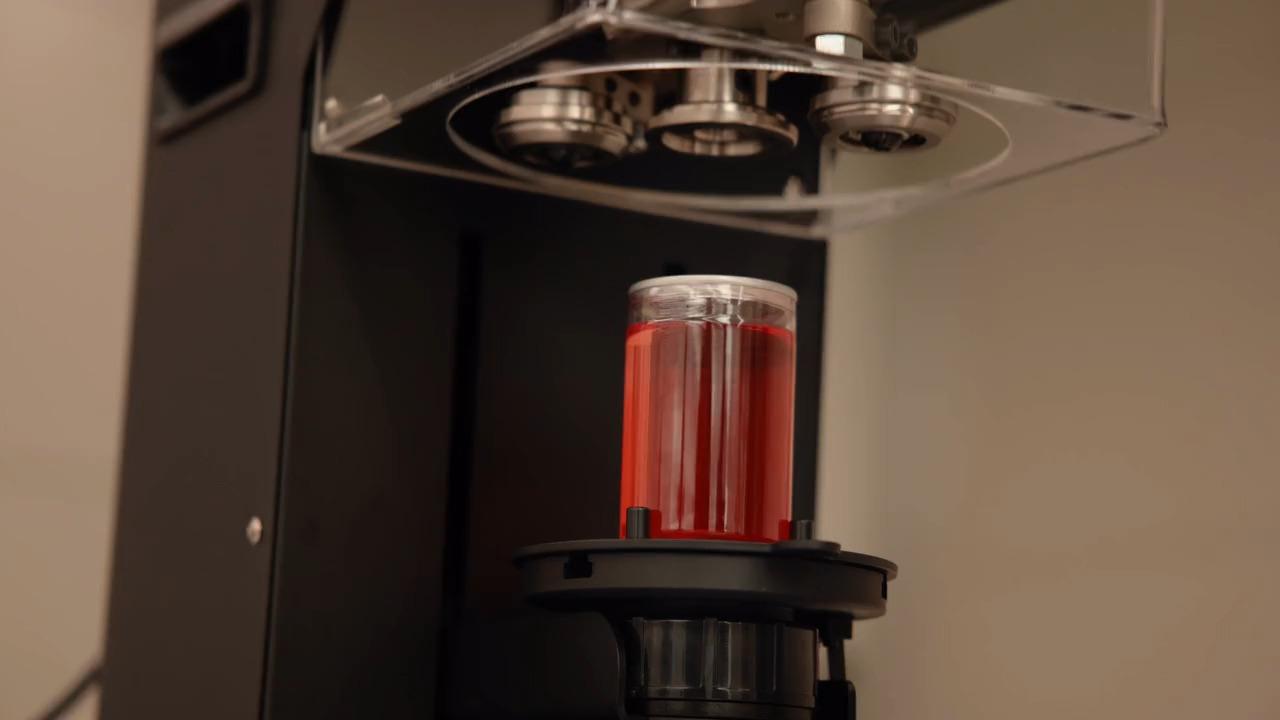
Searches the DNA of wild plants for the changes evolution used to make them grow better, then makes the same small edits in wheat, soy and maize. It also breeds its own UK wheat.
Rebuilding how Europe feeds itself, from farm to fork.
Featured companies
FarmlessAmsterdam, NetherlandsBrewing protein from air and green electricity to decouple protein production from farming.
- Film coming soon

VitaraAmsterdam, NetherlandsTransforming African agriculture through technology, trade and traceability.
- Film coming soon

Seeds, soil & inputs 20
Crop genetics, and the fertilisers, biological sprays and soil products farmers put on their fields.
Recreates the scents plants give off and blends them into granules that keep insect pests off crops without killing anything, starting with aphids in sugar beet.
Builds a container-sized machine that makes ammonia fertiliser on the farm from air, water and electricity, with no gas-fired chemical plant involved.
Builds reactors that make nitrate fertiliser from air, water and electricity with a plasma, the way lightning does, small enough to run beside a farm co-op or a wind farm.
Turns tiny protein fragments that plants make naturally into fungicide sprays for soy, grapevines and potatoes, brewed by fermentation in bacteria.
Breeds soybean and yellow-pea varieties that ripen in cool northern European summers, and coats soy seed with nitrogen-fixing bacteria so farmers can sow it straight from the bag.
Sells sprays made from phytosterols, molecules found in plant cell membranes, that help maize, wheat, sunflower and soy hold on to water and keep their yield through drought.
Finds where a disease has switched off a crop's own immune system, designs the small edit that switches it back on, and licenses it to seed companies.
Grows mycorrhizal fungi, microscopic soil fungi that extend plant roots, matched to each site's soil and crop, for growers who want to use less water and fertiliser.
Builds machines that drive air, water and high voltage through a plasma reactor to make a crop spray that kills fungal disease and leaves no residue behind.
Tests hundreds of thousands of chemicals on living weeds to find herbicides that kill in ways no current product does, then licenses the best to agrochemical companies.
Edits fifty to a hundred genes in a crop at once, chosen by an AI model, to improve traits such as yield and drought tolerance, then measures the plants in an automated greenhouse.
Designs short peptides that copy insects' own hormone signals, to kill pests such as aphids and leafhoppers while leaving bees and other useful insects unharmed.
Turns a wild European legume, the tuberous pea, into a farm crop that fixes its own nitrogen like a pea and grows protein-rich tubers like a potato.
Collects beneficial microbes from plant roots and turns them into seed coatings that help wheat and barley grow on less fertiliser, and into sprays against crop disease.
Coats rice seed with a natural bacterium that lives inside the plant and feeds it nitrogen from the air, so smallholder farmers in South-East Asia can buy less fertiliser.
Breeds new coffee and wine-grape varieties by screening single plant cells with lab robots and growing the best back into plants. First up: a caffeine-free Arabica.
Extracts the disease-fighting compounds that bacteria make and turns them into sprays against potato late blight and downy mildew on lettuce and vines.
Engineers a harmless soil bacterium to make RNA that switches off one vital gene in a pest or fungus, then sprays the bacteria on crops, their cells shielding the RNA.
Grows beneficial microbes for fertiliser and crop-protection companies on a damp bed of farm and food residues instead of in liquid tanks, and is building a factory in Deinze.
Farms & greenhouses 20
Sensors, robots and growing systems used on farms, in greenhouses and in indoor farms.
Builds a robot that runs on the heating-pipe rails between greenhouse tomato rows, finds ripe vine bunches with cameras and cuts them into crates, up to 22 hours a day.
Makes farm sensor stations, camera pest traps and a soil scanner, and runs programmes on food companies' supplier farms that report their carbon and water results.
Software that reads the sensors in tomato and pepper greenhouses, forecasts the harvest weeks ahead and sets the daily watering automatically.
Builds a driverless battery-electric tractor with swappable packs that pulls ordinary farm implements, and doubles as an unmanned supply carrier.
Puts wireless sensors and scouting robots into greenhouses growing tomatoes, peppers and berries, photographing every plant to catch pests early and forecast each zone's harvest.
Grows salad leaves and herbs indoors on towers stacked to the ceiling, at a fully automated plant near Como, and sells them bagged and ready to eat.
Makes soil-moisture sensors and solar weather stations, and an app that combines their readings with the crop and the forecast to tell farmers when to irrigate and spray.
Builds the AX-1, a self-driving cart that straddles a vegetable bed, photographs every plant and fires a single tiny droplet of herbicide onto each weed, sparing the crop beside it.
Rebuilds the tomato greenhouse so the plants come to the robot: each hangs on a conveyor, roots in a nutrient mist, and travels weekly to a fixed robot that strips leaves and cuts ripe bunches.
Makes FarmLab, a handheld probe pushed into the soil to read plant-available nitrogen, organic carbon and moisture in seconds, instead of waiting weeks for lab results.
Builds a wheeled robot that drives along the heating pipes between greenhouse tomato rows, day and night, snipping off each plant's lower leaves with a camera-guided arm.
Builds a light, solar-powered field robot that sows crops, remembers where every seed went by satellite, and hoes out the weeds around them all season without cameras or herbicide.
Hangs solar modules inside glass greenhouses that pass the light plants use and send the rest to solar cells, so the greenhouse makes power and the crop runs cooler.
Builds a probe that hangs above a field and counts the neutrons cosmic rays knock loose. Soil water absorbs them, so the count gives the moisture across five hectares.
Reads how much nitrogen a wheat crop holds from hyperspectral satellite images, and tells farmers each week how much fertiliser to spread, field by field.
Runs Thorvald, a self-driving robot that works strawberry tunnels and vineyard rows at night, shining UV-C light on the plants to kill powdery mildew instead of spraying fungicide.
Hangs small optical sensors over greenhouse crops that read the faint glow chlorophyll gives off, a sign of how well plants photosynthesise, and tells growers when to shade, light or water.
Makes a camera box that mounts on any tractor's roof, photographs the crop plant by plant and switches single sprayer nozzles on and off, so herbicide lands only on weeds.
Builds fully automated indoor farms where robots move racks of lettuce between stations and sow, harvest and bag it untouched, for retailers to run beside their warehouses.
Builds VEGA, a shoebox-sized robot that runs on a rail along a greenhouse roof, photographing every pepper, tomato or strawberry plant to spot pests early and forecast the harvest.

New proteins 21
Protein made by fermentation, grown from animal cells, or built from plants and fungi.
Brewing protein from air and green electricity to decouple protein production from farming.
Sells algae-based supplements, from omega-3 to spirulina and vitamins, on a monthly subscription, and has got them onto Dutch drugstore shelves.
Spins plant proteins into meat-like fibres on machines adapted from the textile industry, then slices them into plant-based ham, cold cuts and salami sold as LEKKA.
Grows a heat- and acid-loving fungus in tanks on crop sugars and dries it into Fermotein, a powder of about half protein, for shakes, bars and baked goods.
Makes plant-based chicken fillets and steaks in a heated vessel whose slowly turning cylinder lines proteins up into long fibres, for restaurants, care homes and brands.
Makes Solein, a protein powder from bacteria grown on hydrogen and CO2 instead of crops, at a factory in Vantaa outside Helsinki.
Grows beef from cow stem cells in thousand-litre tanks in Maastricht, turning one small tissue sample into burger meat without raising or slaughtering cattle.
Grows fungal protein with a chicken-like texture in spare beer tanks at breweries, then shapes and slices it into ready-to-use pieces for food brands and retailers.
Grows mushroom mycelium in tanks on brewery and food leftovers for mince and meatballs, and sells a mushroom-based range in shops while EU approval is pending.
Grows chicken and duck meat from bird cells in steel tanks, with no animals raised or slaughtered. Formerly Gourmey, which is now its brand for chefs.
Makes casein, the milk protein behind cheese, with engineered bacteria in fermentation tanks, and sells it to food makers for cheese, yoghurt and protein drinks.
Brews the main protein in whey with microbes, tunes it to survive heat and acid or to set into a gel, and sells it to makers of protein drinks, yoghurts and bars.
Makes casein, the milk protein that lets cheese curdle, melt and stretch, by fermentation in a steel tank it calls Margaret, and sells it to cheese makers.
Turns sugary food-factory leftovers into PEKILO, a neutral fungal powder that is half protein, starting with pet food and fish feed.
Ferments organic Nordic crops such as potatoes, oats, peas and beetroot with fungi for a week, until the threads bind them into mince, patties and a cooking block.
Grows mycoprotein, the fungus behind Quorn, in tanks beside a Swiss sugar mill, sells it under the Libre brand, and licenses the set-up to sugar companies.
Makes casein, the milk protein that lets cheese curdle, melt and stretch, with microbes fed on a cheese-making leftover, and sells it to food makers.
Grows fungus in tanks into steak-like slabs for restaurants, with a meaty texture that comes from the fungus itself. Five ingredients, no binders.
Brews casein with microbes and builds it into the tiny protein clusters found in real milk, as a powder dairies can turn into cheese on their existing lines.
Licenses a way to grow fungal protein on food-factory leftovers like soy pulp and oat residue, and supplies the cultures so manufacturers grow it in their own tanks.
Brews milk proteins with microbes in steel tanks: a whey protein for clear sports drinks and bars, and lactoferrin, a scarce milk protein that binds iron.
Ingredients & processing 19
Fats, sweeteners, colours and flavours made new ways, and the machines that process food.
Builds self-contained robotic kitchens the size of a large fridge and counter, where robot arms portion fresh ingredients, cook pasta, curries and bowls, serve and wash up.
Ferments and roasts sunflower seeds into ChoViva, a chocolate made without cocoa that food makers use in bars, biscuits and ice cream.
Combines international commodity trading with innovative technology to connect African farmers to global markets, build sustainable supply chains and create lasting economic and social impact.
Puts cameras over conveyor belts in food factories, where software checks every fry, pastry or flatbread and adjusts the machines itself when quality starts to drift.
Turns wood-pulp cellulose into a white powder that whitens food, sunscreen and paint without titanium dioxide, through the way its particles scatter light.
Collects apricot, plum and cherry pits from fruit processors, cracks them, strips the natural cyanide compounds from the kernels and turns them into almond-like pastes and oils.
Makes chocolate without cocoa by fermenting and roasting grains and carob the way cocoa beans are treated, and sells chips, drops and melts to bakeries and food makers.
Feeds potato peels, whey and other food-factory leftovers to a naturally oil-rich yeast, then refines the oil into a replacement for palm, coconut and shea fat.
Grows a fungus discovered at the Technical University of Denmark that makes a new red pigment, sold as Natu.Red, a natural food colour that stays red when cooked.
Takes the spent yeast breweries drain off, breaks the cells open and separates them into a neutral protein that replaces egg and a fibre that gels, at a former dairy plant in Lyss.
Builds fermentation plants where microbes brew proteins, collagen and enzymes for food and cosmetics makers, starting from a pilot site in north-east Italy.
Grows oil-rich yeast on sugars from food waste such as surplus bread, in a million-litre plant near Liverpool, and extracts oils and fats to replace palm oil.
Breaks yeast apart mechanically, much of it spent yeast from AB InBev's breweries, and separates out a neutral protein that replaces eggs in mayonnaise, sauces, cakes and plant-based meat.
Feeds a red, oil-making yeast on sugars from sawdust and food leftovers, and sells the oils to cosmetics makers now and to food makers once approved.
Grows koji mould on food-factory leftovers such as prawn shells, chicken carcasses and mushroom stems, turning them in three days into savoury flavour concentrates.
Ferments and roasts the pulp of Mediterranean carob pods, usually thrown away, into Choruba, a cocoa-free chocolate for pralines, Easter eggs, panettone and coatings.
Grows koji- and tempeh-style moulds on sunflower and flax press cake, bran and broken pulses, then dries and grinds them into natural flavours: a meaty umami and a cocoa note.
Ferments food-factory leftovers such as fruit pomace, bran and fava hulls in a damp solid bed, the way tempeh is made, into cocoa-free powders, fillings and chips called Milatea.
Brews brazzein, a protein from a West African berry 1,500 times sweeter than sugar, with yeast in tanks, to cut sugar in dairy, sweets and bakery.
Waste & retail 11
Cutting food waste in kitchens and shops, keeping food fresh for longer, and packaging without plastic.
Helps restaurants and hotels see exactly what they throw away, and why, so they can cook and buy less of what ends up in the bin.
Builds tabletop infrared scanners and software that tell growers, shops and shoppers how ripe an avocado or strawberry is and how long it will last.
Makes norifresh, a clear, printable seaweed film that fruit packers heat-seal as a lid onto cardboard punnets of berries in place of plastic, on the machines they already use.
Puts small wireless gas sensors inside packs and pallets of raw meat and fish that read the gases bacteria give off as it spoils, and forecasts each batch's real shelf life.
Makes a stainless-steel scale that the kitchen food-waste bin stands on, with a camera above it, weighing and photographing everything thrown in without anyone pressing a button, for hotels and canteens.
Mounts a 3D camera above the tray return in canteens, recognises around a hundred foods left on each tray, and tells chefs dish by dish what is wasted and how to cook less.
Turns pea and rapeseed proteins into thin coatings that replace the plastic lining in paper takeaway boxes, and into films that dissolve in cooking, and licenses the recipe.
Makes plant-based sprays for fruit: an invisible edible coating that keeps avocados, limes and mangoes fresh on long sea journeys with less fungicide, and a leaf film against drought.
Calculates the carbon footprint of individual food products for supermarkets and their suppliers, tracing each product's supply chain back to the farm.
Builds an instrument that identifies Listeria, Salmonella and other bacteria in a food sample the same day, by reading each species' light fingerprint on a disposable chip.
Sprays cucumbers in the packing house with an invisible edible film of rapeseed and oat oil, which keeps them as fresh as the plastic shrink-wrap Swedish cucumbers come in.