Farmless
Brewing protein from air and green electricity to decouple protein production from farming.
Half of all the land we can use on Earth goes to agriculture. Three quarters of that goes to producing animal protein: the pastures livestock graze on, and the far larger stretches of grass and maize grown just to feed them. Everything else we have ever built, every city, every road, every factory, adds up to roughly 1% of that same land.SourceGlobal land use — Our World in Dataourworldindata.org (opens in a new tab)
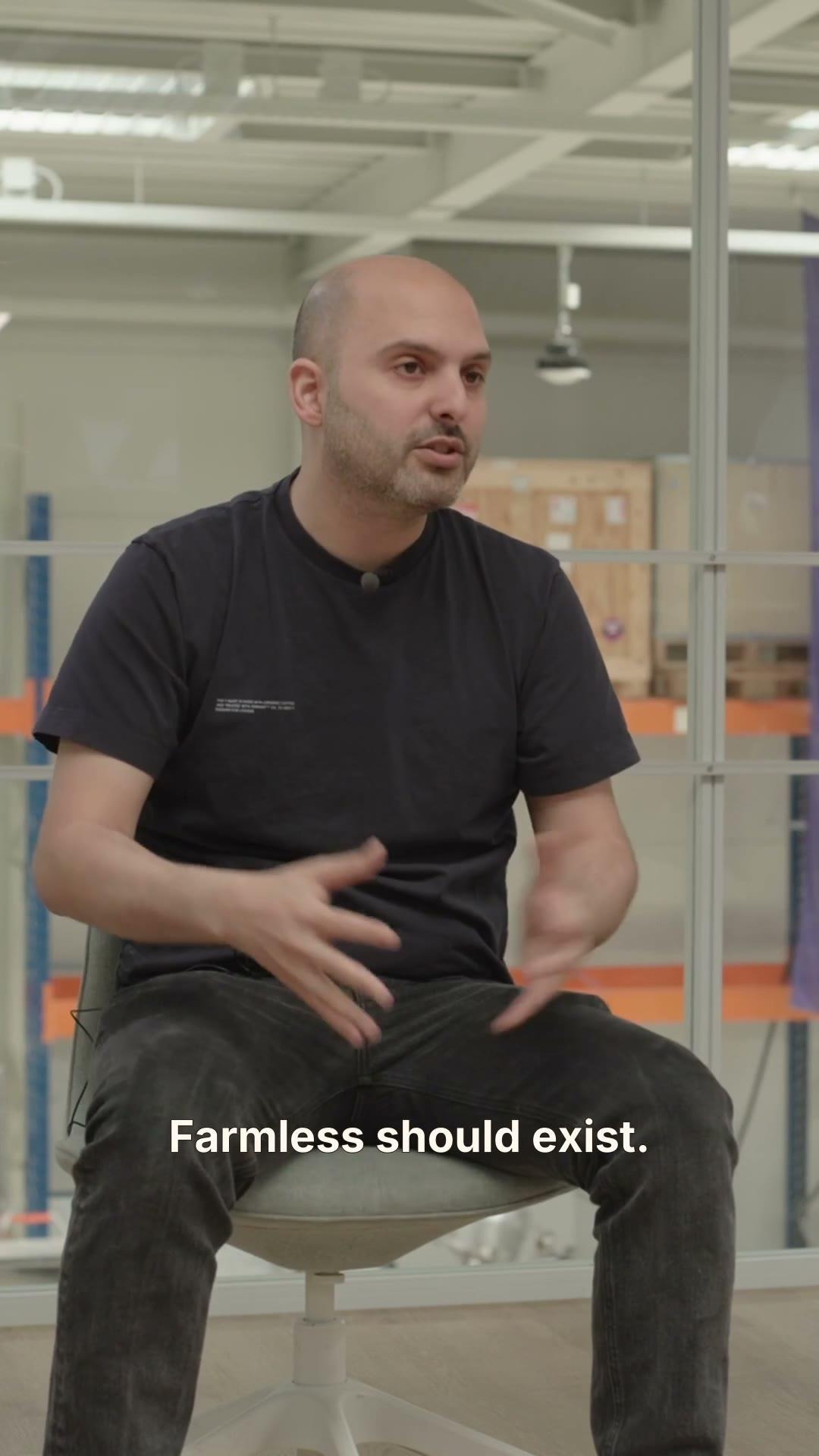
Farmless brews protein instead of farming it, freeing that land up for something else. "Then we can give back all of the land to nature," says founder Adnan Oner. "Rewild, more energy, more cities, more abundance." He means it literally: forests and wetlands full of wildlife, wind turbines and solar fields where pastures used to be, and cities with further room to grow.
Take the train out of Amsterdam in almost any direction, and within half an hour you are surrounded by exactly the kind of landscape its product is meant to replace: agriculture so woven into the Dutch countryside that you stop noticing it. It's no coincidence, this is Farmless's hometown too. We spent a day at their office talking to Adnan Oner, the founder, and Bálint Magyar, the Principal Software Engineer, working on turning the Farmless vision into a reality.
- Adnan
- on the six years he spent searching for a problem worth solving, why he trusts a hobby project over a polished CV, and what he thinks you should actually do with your twenties.
- Bálint
- on getting hired straight out of his bachelor's with no software career on his CV, what it feels like to be handed ownership of the platform the whole company now runs on, why everything at Farmless happens at yesterday's deadline, and how he learned an entire new field by doing it rather than studying it first.
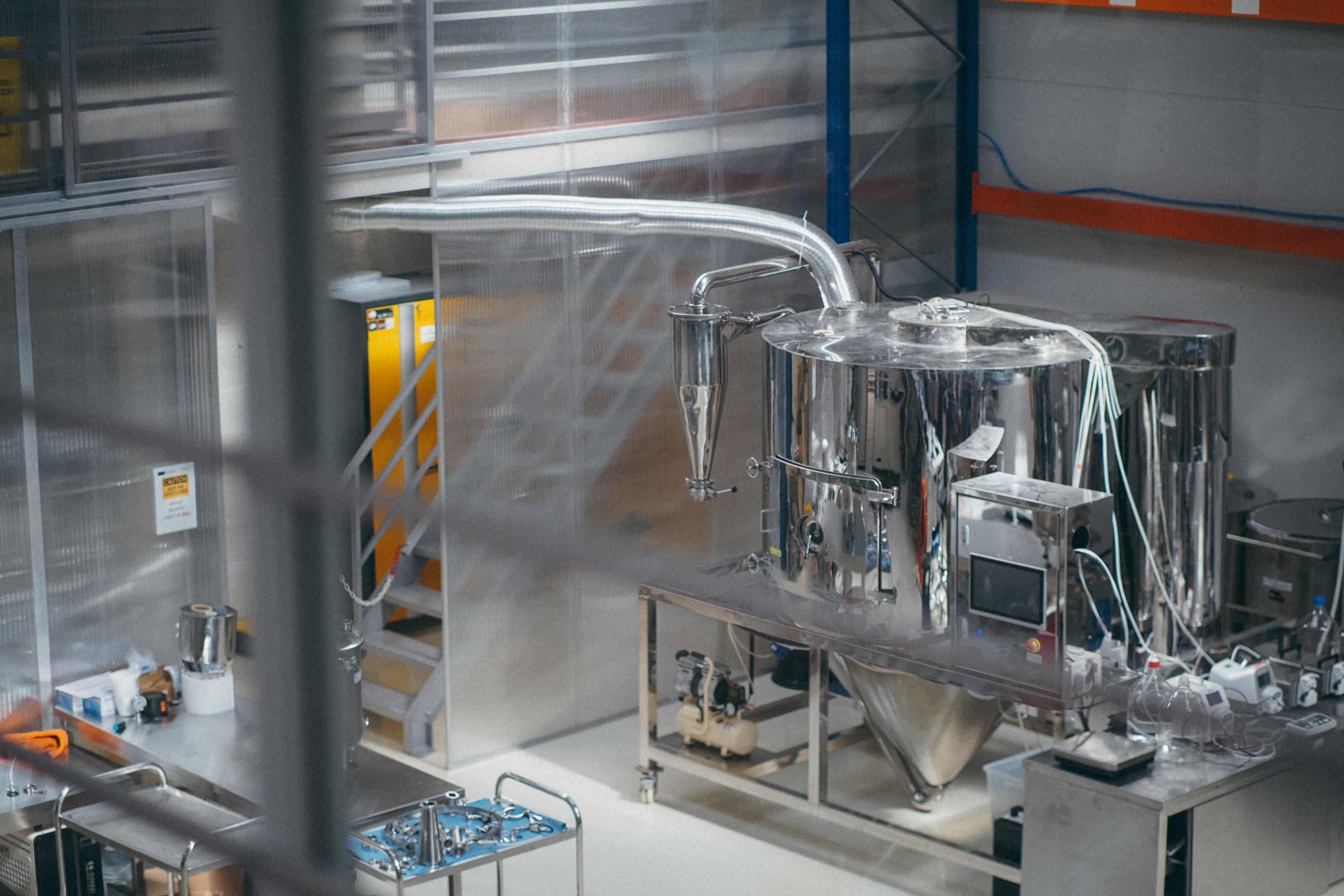
Beer, Inverted
Protein is essential to how the human body works, and for most of history animals have been our default source of it.SourceMuscle, organ tissue, enzymes, hormones and the immune system are all built out of protein, which the body takes apart into amino acids and reassembles into whatever it needs. Nine of those amino acids it cannot make itself at any useful rate, so they have to arrive in food. That is what "essential" means here, and it is why protein is a daily requirement rather than something the body can simply produce on demand.Essential amino acid — Wikipediaen.wikipedia.org (opens in a new tab)SourceAppropriately planned vegetarian and vegan diets can be nutritionally adequate for adults, so the animal default was never a biological necessity. Meat offered far more calories for far less effort than plant food could, at a time when fuelling an increasingly energy-hungry brain mattered. In cold, arid or plant-scarce environments it was often the only reliable food source available. And once animals were domesticated they became woven into agriculture itself — for labour, manure, wool, milk — so meat and dairy production reinforced themselves within that system, independent of whether they were ever strictly required.Vegetarian Dietary Patterns for Adults — Academy of Nutrition and Dieteticspubmed.ncbi.nlm.nih.gov (opens in a new tab) That demand has not gone anywhere, if anything the opposite: step foot inside the supermarket down the street from Farmless's office and protein is stamped on the shelves everywhere you look. But importance alone does not explain why it takes up so much space. Animal protein is also remarkably inefficient to produce, which traces back to what is up above you in the sky, albeit not always clearly present in the Netherlands: sunlight. Virtually all food energy starts there. Plants capture it through photosynthesis and convert it into plant matter, but only at about 1–2% efficiency. The animals we ultimately get our protein from add another layer of inefficiency: most of what they eat gets burned for movement and body heat rather than turned into meat. A cow eats roughly twenty times its own weight over its lifetime to produce that meat, and even the chicken, the most efficient farmed animal there is, eats about five times its own.SourceFeed required to produce one kilogram of meat or dairy product — Our World in Dataourworldindata.org (opens in a new tab)
Following along?
Subscribe to our newsletter for updates on us and our partners.
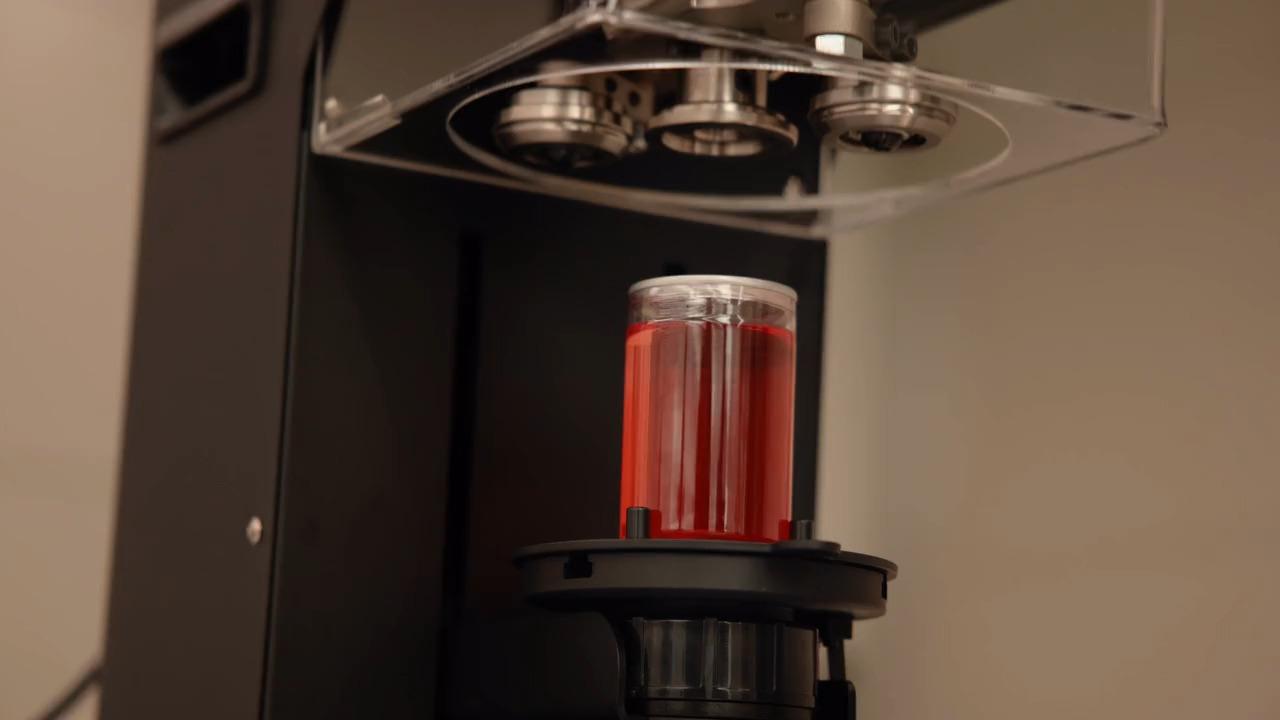
"Proteins are very complex," Adnan says. "They fold in mysterious ways, hard to get tasty.SourceAmino acids are small molecules that link together into a chain, like beads on a string, and that chain is what a protein actually is. The moment the chain is built, it folds itself up into one specific three-dimensional shape, and that shape is what lets it do its job, whether that's building muscle or carrying oxygen in blood. Proteins do this correctly and almost instantly on their own in nature, which is exactly why copying that shape artificially, in a lab, is such a hard problem.Protein folding — Nature Scitablenature.com (opens in a new tab) You can't make them nicely through chemistry. So there you have nature, and nature's really good at making proteins tasty." To get around the inefficiencies of animal protein, Adnan turned to fermentation, growing living micro-organisms, microbes for short, that do the chemistry nature already solved.SourceMicrobes, also called microorganisms, are organisms too small to see with the naked eye, among them the bacteria and yeasts that have quietly done humanity's fermentation work for thousands of years, in bread, beer and cheese. Fermentation, in plain terms, is what happens when these microbes eat a raw material and turn it into something new, the way yeast turns sugar into alcohol in beer, or bacteria turn milk into cheese. Farmless uses that same basic process, just aimed at growing protein instead.Early Biotechnology — Cheese, Bread, Wine, Beer, and Yogurt — LibreTexts Biologybio.libretexts.org (opens in a new tab) Farmless feeds a natural fermentation on a liquid made from captured CO₂, green hydrogen and renewable electricity, then ferments, harvests and dries it into a whole-food protein powder that's 60–80% protein.ExplainerThe feedstock is where the "green energy" claim actually lives: CO₂ plus green hydrogen, combined using renewable electricity into a liquid alcohol, with nitrogen supplied as green ammonia. The microbe does the rest. Farmless's climate figures come from an internal life-cycle assessment and have not been independently verified. The brewing step looks like beer-making, but the logic is inverted: a brewery grows yeast to produce alcohol and keeps the alcohol, discarding the yeast, while Farmless grows its microbe to be the product and discards the liquid. Pepijn Vloemans, former Head of Communications, put it simpler than we ever could: molecules go in, milkshake goes out.Source“My time at Farmless” — Pepijn Vloemans on Substackpepijn.substack.com (opens in a new tab) Everything hinges on getting that microbe right, the thing standing between molecules and milkshake, and the one they've found tastes and behaves like animal protein, while growing fast and cheap as well.
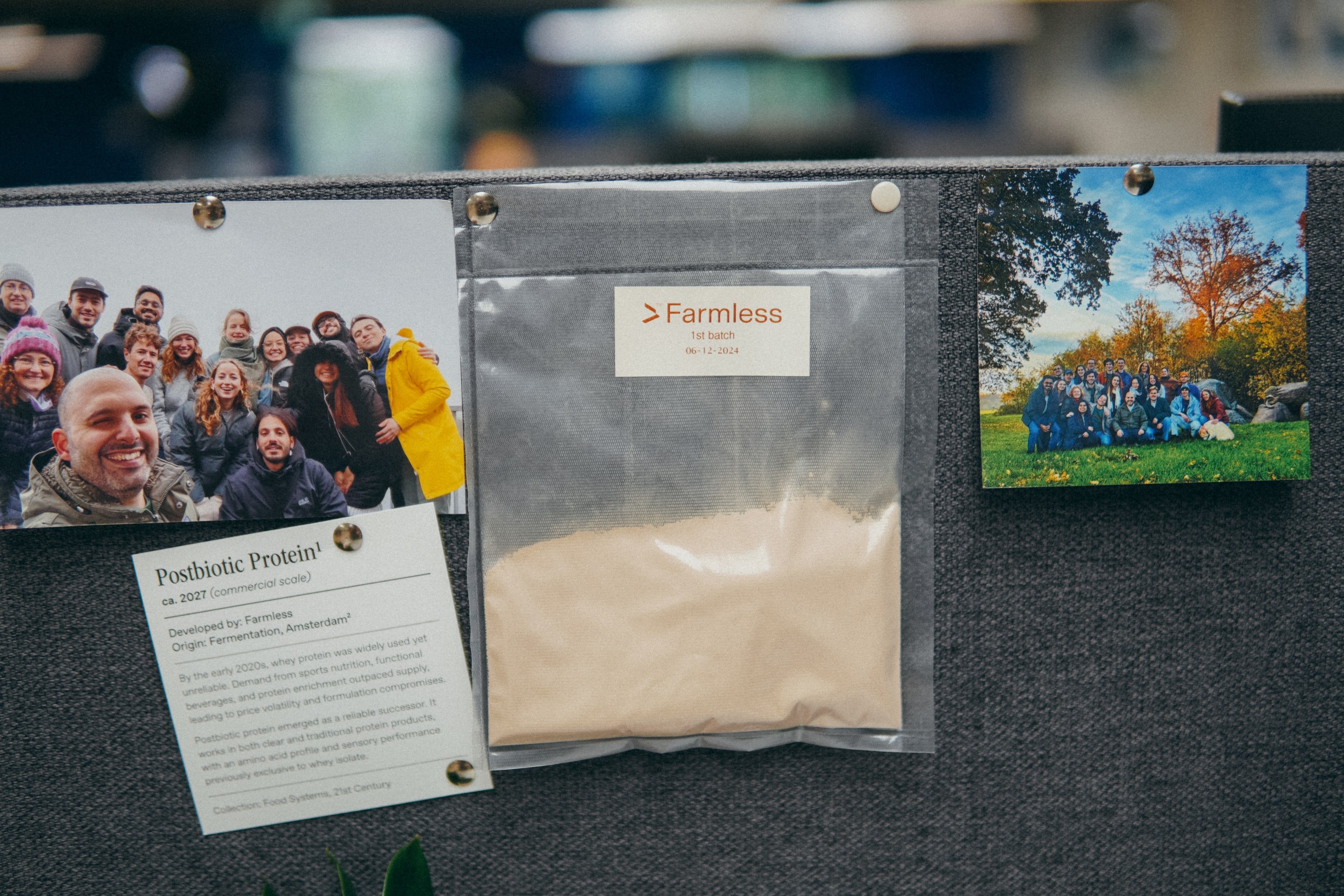
The plan is to sell it as a postbiotic protein to food companies, once it clears approval to be sold as a novel food. By its own life-cycle assessment, a kilogram of Farmless protein takes roughly 5,000 times less land and 4,000 times less water than beef, at 227 times lower emissions. Freed from livestock, that land no longer emits the enormous amounts of carbon it once did. What's more, it can now be repurposed to capture carbon instead, or drive negative emissions in other ways. Farmless compares its ambition to Haber-Bosch: just as synthetic fertiliser ended up feeding half of humanity, it is betting its protein could reshape food supply at a similar scale, eventually "visible from space."SourcePlants need nitrogen to grow, but for most of history the usable kind was scarce, limited to whatever manure, crop rotation or mined deposits could supply. The Haber-Bosch process solved that by pulling nitrogen straight out of the air, which is almost 80% nitrogen, and turning it into fertiliser on an industrial scale. That one invention is why farms today can grow far more food per hectare than they ever could naturally, and why, by one widely cited estimate, close to half the nitrogen atoms in the average human body today trace back to it."Fritz Haber and Carl Bosch – Feed the World" — The Chemical Engineerthechemicalengineer.com (opens in a new tab) Its real fight isn't with other fermentation startups chasing the same goal, but creating tasty and functional proteins at price-parity.
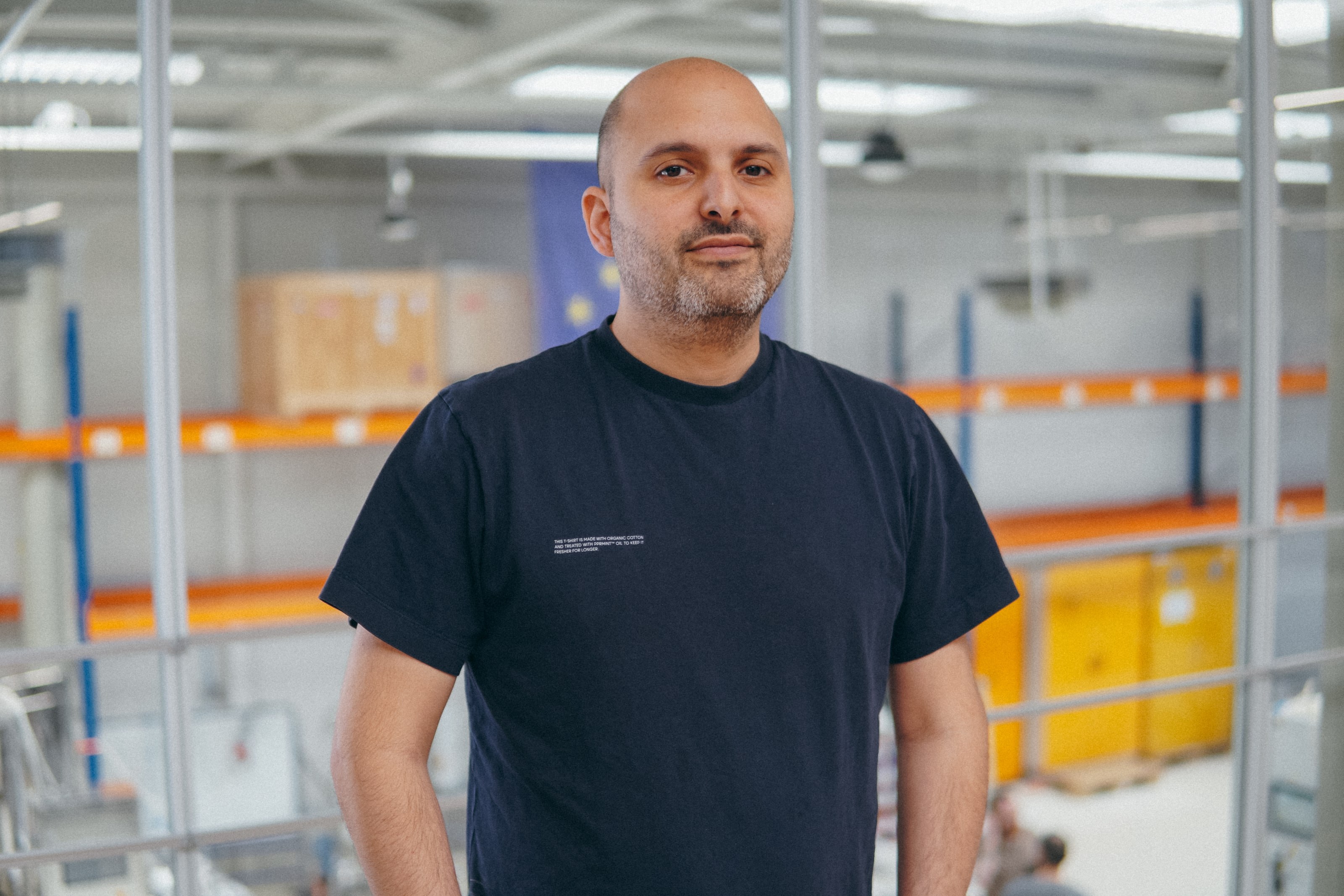
Adnan Oner, founder.
Studied Physics, TU Delft & UvA. Physicist who spent six years testing ideas, from a sunglasses store to SaaS and hardware, before settling on Farmless. Driven by impact and an outspoken champion of Europe's own ecosystem, he urges people to "start a very ambitious company."
A System for Impact
Adnan spent roughly six years figuring out what to work on before starting the company, running every idea through the same filter. "I would look at three things. Can the problem be solved through the economic system? Is it impactful? And is it already going to be solved by smart people already working on the problem?" A problem being enormous was not enough to him, it had to be enormous and neglected, because that is where one more person actually changes the outcome. "That's the way you can truly create impact," he says.
He'll create plenty of impact if Farmless succeeds, that much is sure. His envisioning what that impact looks like exactly, what we'll do with the land, had our minds racing right along with him. "It becomes a philosophical question: how do you want the planet to look like?" His answers: more energy, cities, rewilding and a different kind of agriculture. Take the pressure off Dutch farmland and you can intercrop instead of growing monoculture, or use robots to weed instead of spraying pesticides. "Suddenly, if land is not that precious anymore, you can do all of these things."
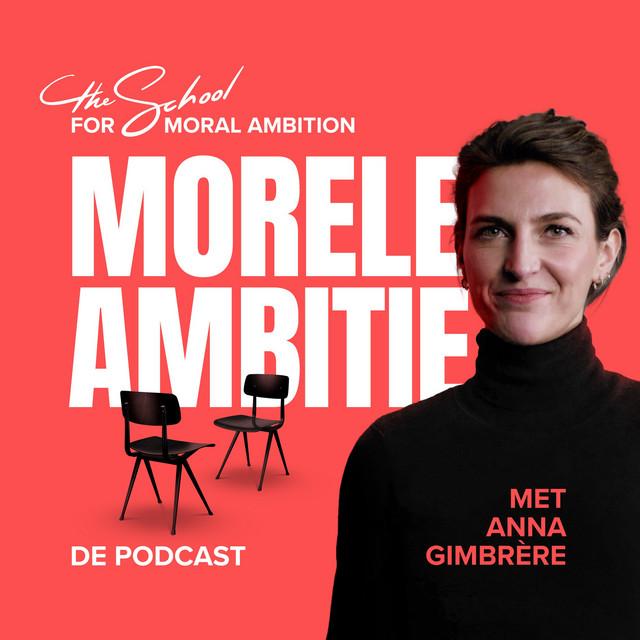
Logically, not all of his six years ideating led straight to land, though. Before he landed on protein, Adnan spent a long stretch considering carbon capture instead. He also worked part-time through much of those six years while he searched for problems to solve. It's worth listening if you want to understand his process better: the De Rudi & Freddie Show and Morele Ambitie podcasts go deep (in Dutch).
Farmless Coats for Everyone
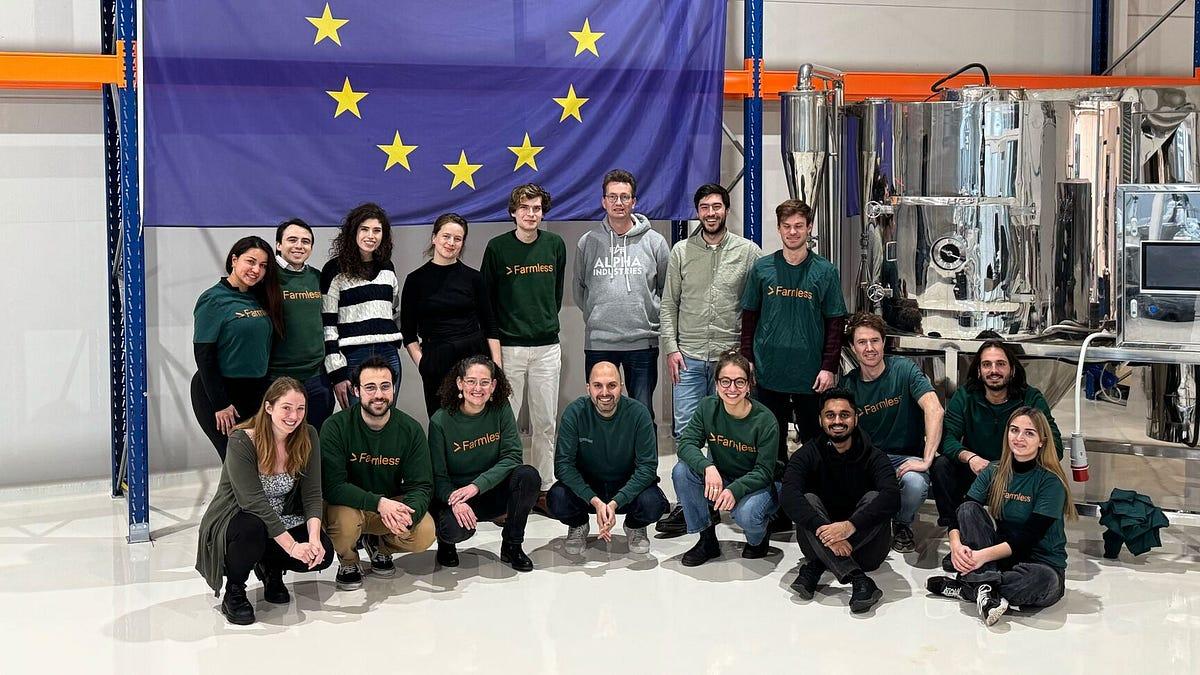
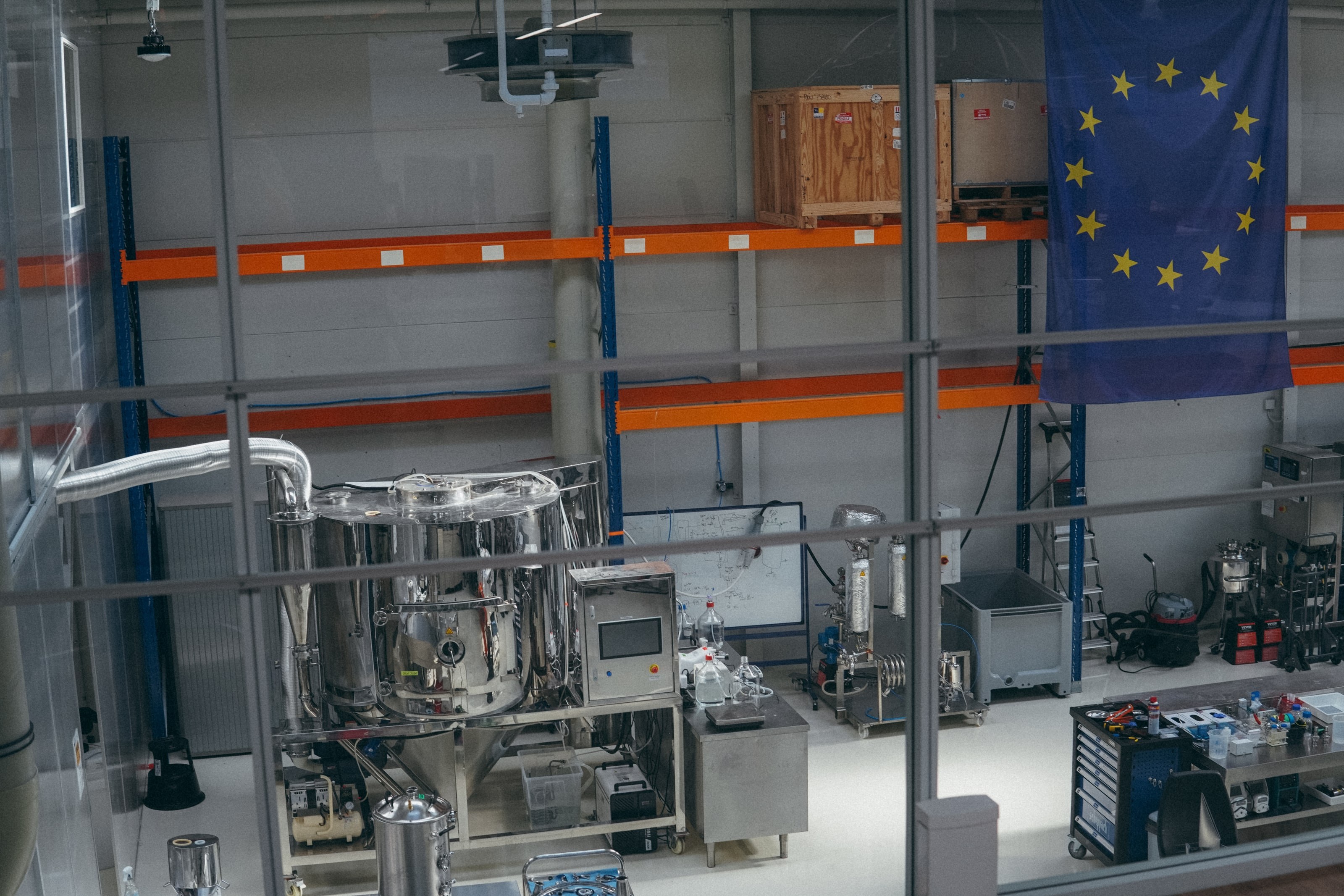
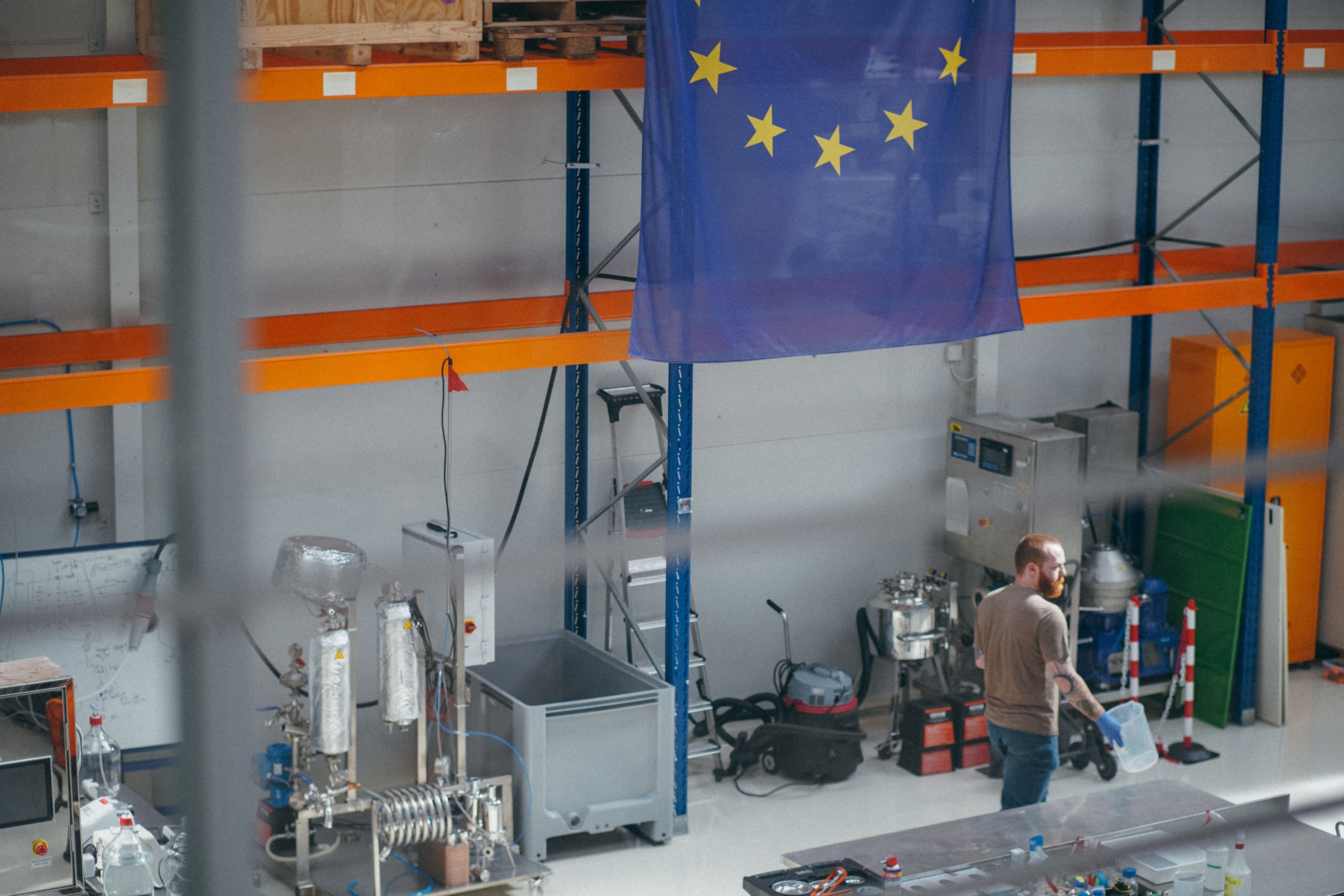
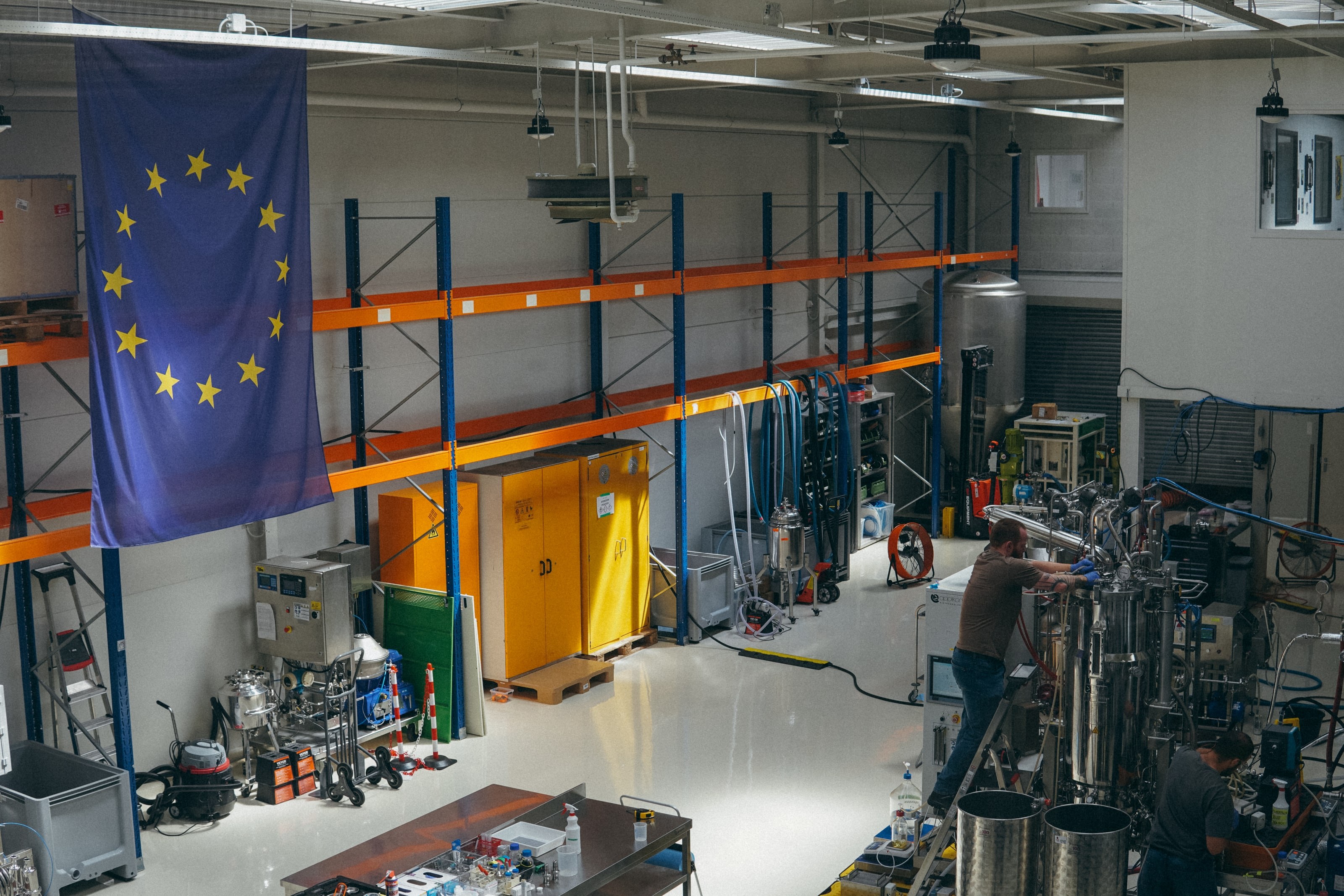
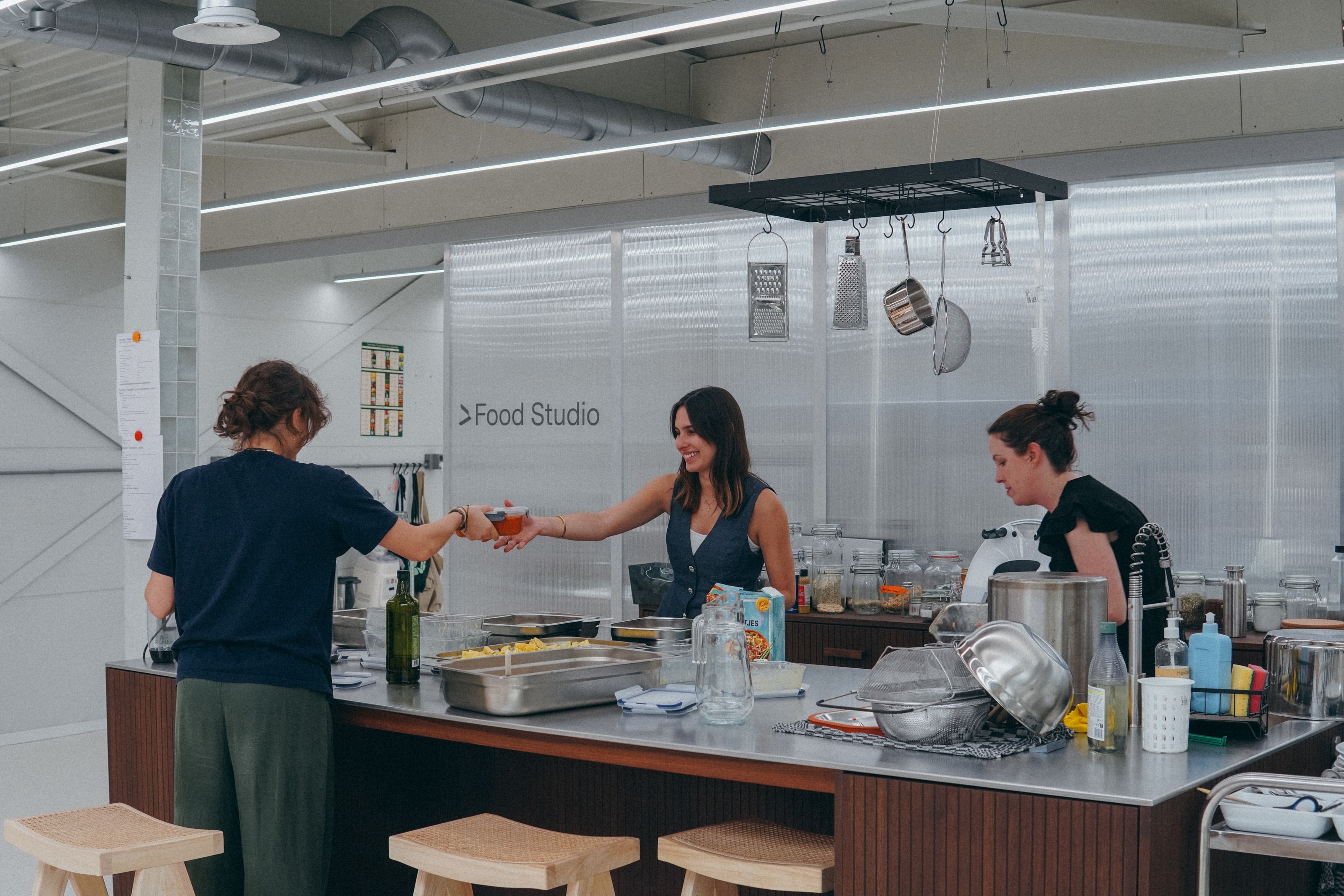
In late 2024, Farmless consolidated everything – R&D, pilot brewery, food studio, kitchen, and offices – under one roof, so the whole company is a single tight feedback loop. A European flag and a Dutch flag are featured prominently in the office; fitting for a founder as outspoken about backing Europe's own ecosystem as Adnan. The research space is the most fascinating part of the building, visible straight from the open office through a wall of windows, rows of equipment quietly at work behind the glass. People move constantly between their laptops upstairs and that R&D space below, picking up a coat with the Farmless logo from a rack near the stairs on the way down. In the meeting rooms we pass, each named after a fermented food like the Miso or Kombucha Room, people patiently talk through a plan and search for solutions together, actually listening to each other, and it is clear everyone here works hard. Lunch, a warm one shared with the whole team, was vegan and prepared by the Farmless team themselves: .
Rows of steel kettles were doing their work with next to nobody tending them while we were eating. Knowing so much already runs automatically makes walking through their current brewery even more inspiring: they have now proven their concept on a small scale. Adnan told us their approach is contrary to the fermentation industry's general instinct, which is to scale up right away: 200,000-litre tanks, vast bespoke projects. Adnan thinks that is exactly wrong.
"I think what you need to do is to intensify your process. You need to make it continuous. What that means is that you make these small fermentation tanks with the whole harvesting around it. This unlocks modularization, and in a long time, modularization unlocks lower cost and lots of automation, because you get standardization. Essentially we’re working towards building the factory that builds the factories."
Small, identical, repeatable units. Every iteration drives down the capex and the opex, but maybe most importantly: the number of people needed to run one. Where large-scale factories would traditionally require an immense amount of people to keep everything running, Adnan told us that they might move towards what the industry calls a dark factory: a production facility that needs no lights, because nobody is inside and everything is running automatically.
This, as it happens, is also a software problem: every process needs its data tracked, its parameters adjusted and its machines steered automatically, with alerts firing the moment something goes wrong. This is where Bálint comes in.
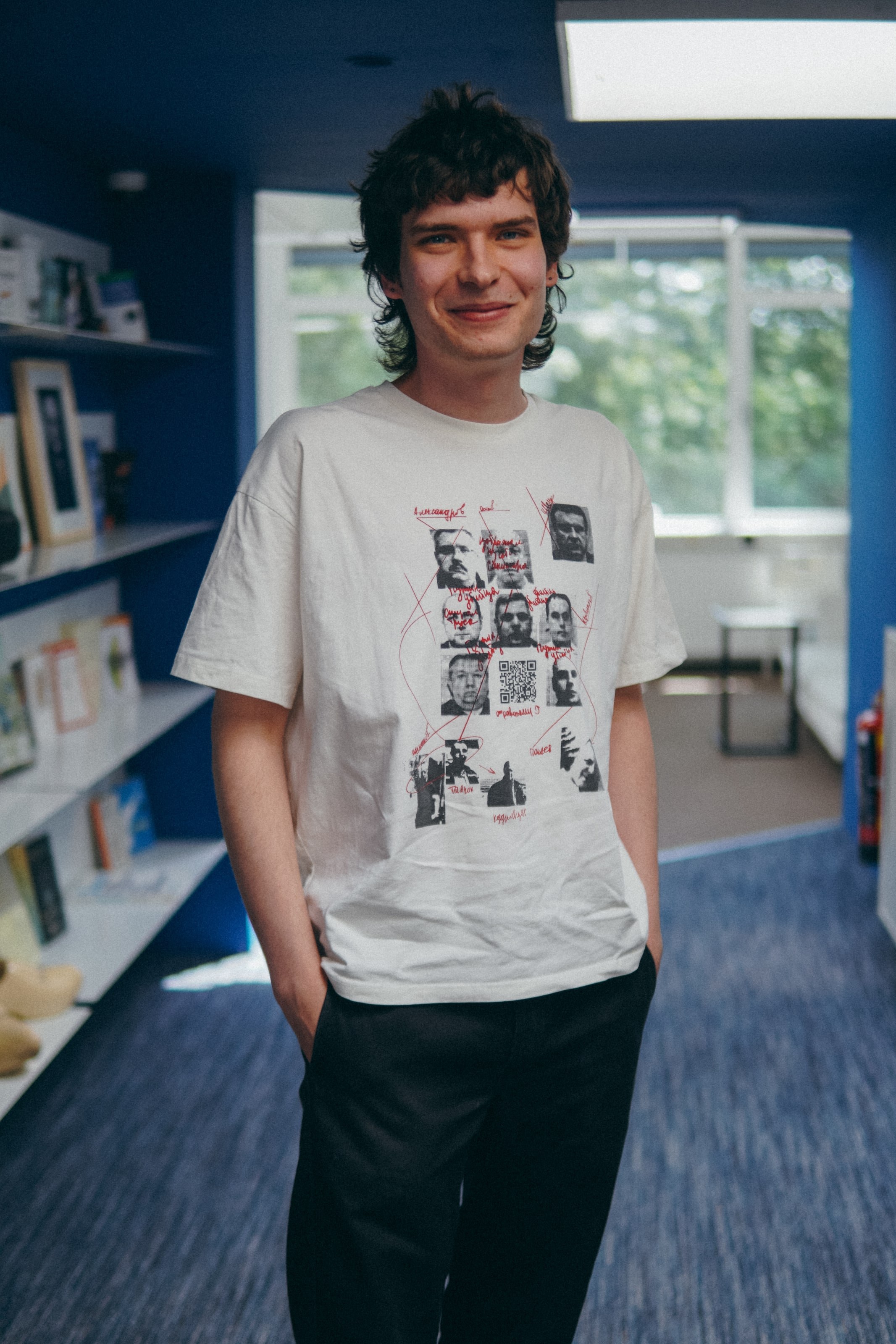
Bálint Magyar, principal software engineer.
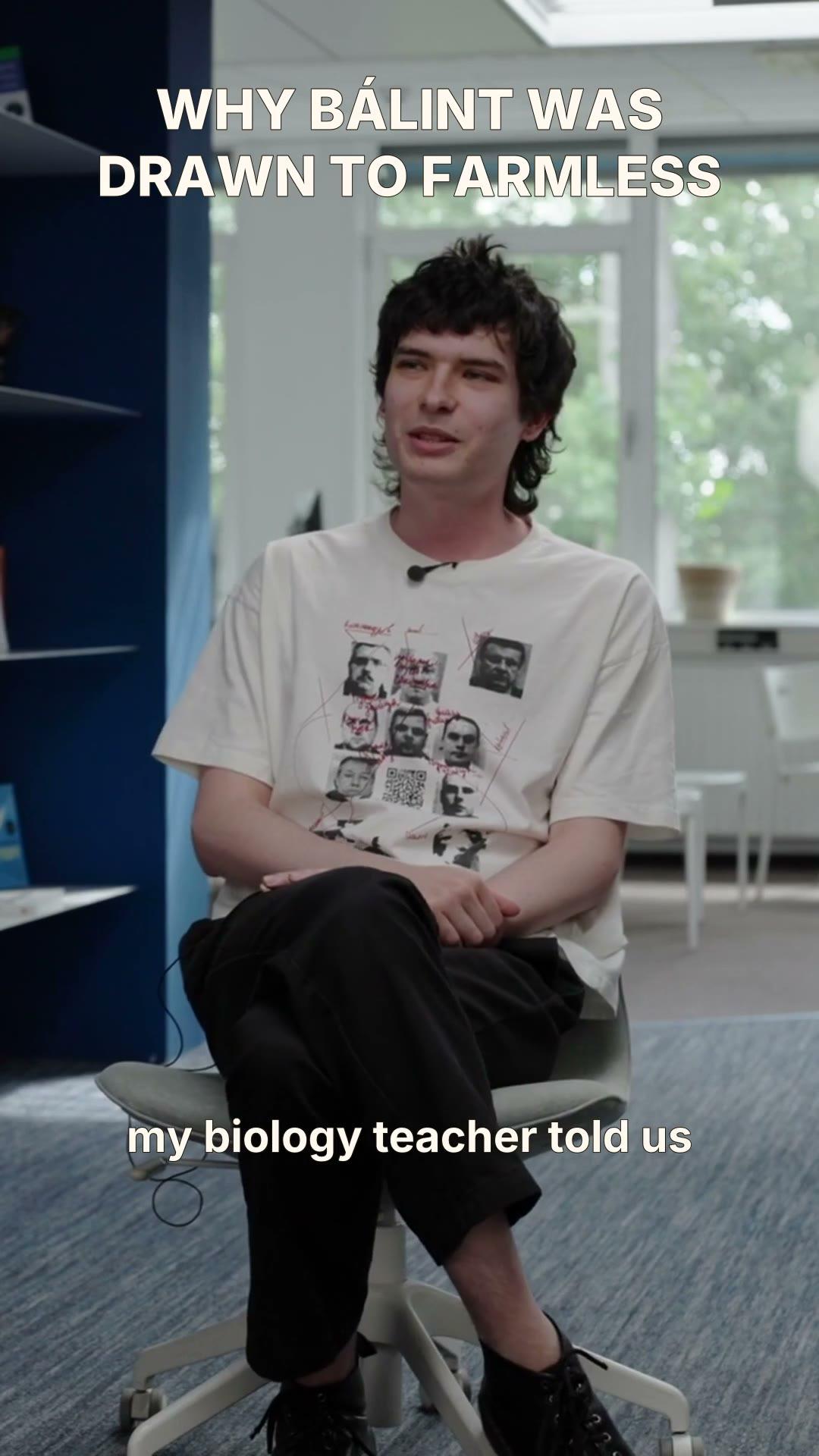
Studied Nanobiology, TU Delft. Joined Farmless straight out of that bachelor's, after side-projects running from video games to leading Delft's football-playing robot team. Still chasing the same rush he got from robots as a teenager. "That crazy feeling when, after all that work and exhaustion, it just works."
Everything Needs to Happen Yesterday
The first step towards that fully autonomous system was BrewBase. Adnan had hacked together an early demo himself, then pulled in his friend Thomas van der Kleij to build a proper prototype: a platform built in-house to hold all of the company's data in one organised place, competing at first against the humble spreadsheet everyone already knew how to use. The mandate handed to a software engineer straight out of a bachelor's was to build the system the entire company would run on, and get everyone to use it. Bálint tells us that building it was actually not the hard part. "When I got in, people were kind of skeptical. Everyone had their workflows already, right? So my job was really to come in and spearhead this effort, build out the platform, and get people to use it."
It seems like a wild assignment to hand someone barely out of a bachelor's: build the control system for a process nobody has fully figured out yet. Bálint just took it step by step. Before he could design anything, he had to understand a science he had only touched at university, and he was not afraid to just dive into something completely new. "I had some background in biology, but I'm not a biologist, really. So I came in and had to learn how the process works." Learning worked by relying on the teammates Farmless already had. "The most fun way to do that is by working alongside really smart and talented people who know their shit really well, and just kind of absorb it. So even though I was a software engineer in title, I went down in the first week and did fermentation along the actual fermentation scientist."
Once he understood the science, he had to apply that knowledge to the problem he was actually facing. Traditional industrial control systems were designed for processes that stay identical for decades. Farmless's process is still being invented, and changes as fast as the science does. The system Bálint is developing has to have industrial reliability, while letting a fermentation scientist iterate at startup speed.
So he went on to find the people with knowledge he was missing. "I had a lot of calls with veterans in industrial automation and people who built this kind of stuff, and I tried to figure out what is known to work and not work when building a system like this." What he found was an industry stuck in the past. "In the world of industrial automation, there's a lot of archaic stuff that's a legacy of the nineties. This is an industry that's very reluctant to change. So I tried to approach it by taking the lessons from modern software engineering and applying them to innovate in this space."
What Bálint built stretches well beyond BrewBase now: custom hardware, and systems that steer entire fermentations on their own. There was even a moment where he broke straight into a machine's own controls just to get it to do what he needed. New components show up at a pace that matches the rest of the company: leave for a few days, and you come back to find something entirely new running.
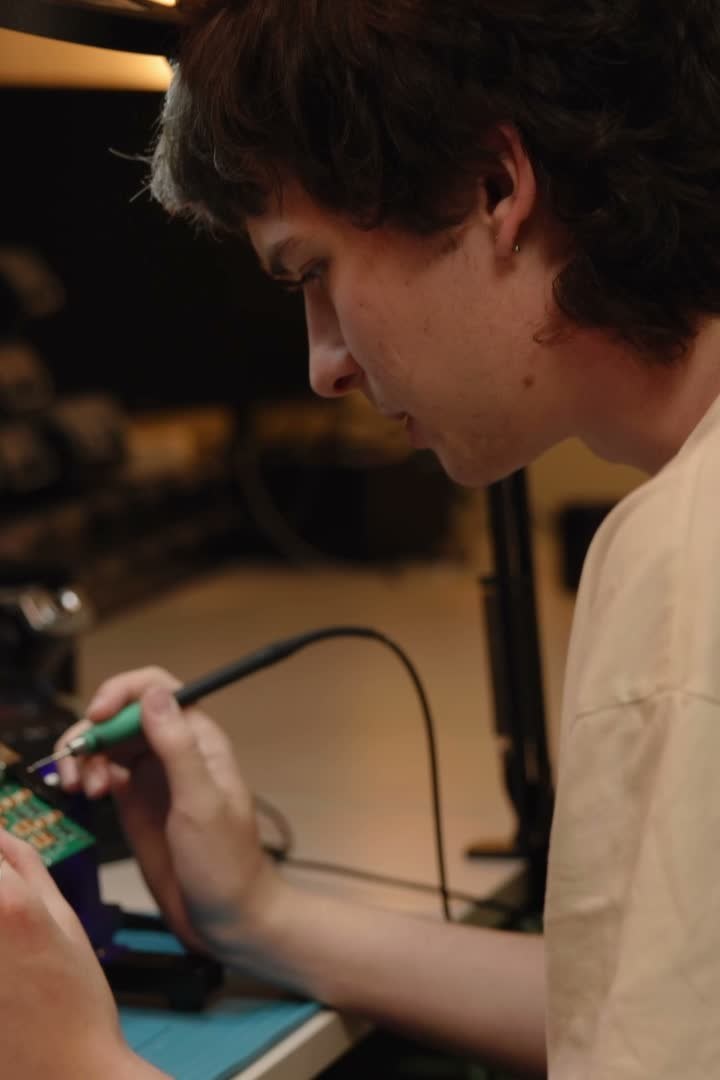
"It's very fast. Everything needs to happen yesterday, because if you're a startup, the clock is always ticking. You have to get to profitability, because otherwise you're dead. So the pressure was on from the first day. But that's what I signed up for."
He signed up for it realising the shared mission and vision behind it. "Let's say you start working at Farmless and you see this vision of building these factories that produce tons of food without agriculture. And it sounds crazy, but there is an actual plan of how to get there. And you can be a huge part of that." He continues: "There's a ton of work that needs to be done, and all of it is very meaningful towards the plan. You can pick up as much as you like, take on as much responsibility as you can, and learn whatever it takes to get it done. And in the end, the company provides you the environment to help you realize that."
Being this junior on a job like this comes with a cost. "There's a lot of stuff that you need to figure out from scratch that maybe a more experienced person would just know right away. You can spend a lot of time on figuring out basic decisions or how to architect systems just because you've never done it before." But he sees that cost as as advantage. "But that's also the learning opportunity, right? You learn much more by trying and failing and then getting it right eventually than by someone just telling you the direct way."
It is also not a desk job, and the ownership cuts both ways: when something breaks, it is on him to fix it. "I just came upstairs from fixing a leak in the temperature control system," he says, "you should be willing to get your hands dirty." That does not stop after office hours. "There are times when I get a call at, let's say, 10 p.m. on a Saturday because the feeding system for the pilot fermentation has stopped working. So I have to remote log in to the fermenter control system and try to debug what's happening."SourceA feeding system is the pump and plumbing that automatically doses feedstock, the liquid the micro-organism eats, into a running fermenter. When it stops working, the fermentation itself is starved of what it needs to keep growing, which is why a broken one gets a call at 10 p.m. on a Saturday."Bioreactor Cell Culture Techniques and Strategies" — Hamilton Companyhamiltoncompany.com (opens in a new tab) Sometimes someone has to drive to the office to fix a pump. That sucks, he agrees, without hesitation, but the payoff is what keeps him going: "you do it because you care about it. And in the end, it all comes down to: if it works, it feels awesome, because you did the work."
It is easy to feel small against how many problems get named every single day. Talking to Bálint left us genuinely energised, because here was one person, straight out of his studies, making all of this work without having the expertise beforehand, pushing Farmless a major leap closer to the vision we opened with.
Hobby Projects Over CVs
Look at Bálint’s background and it reads like it was built for Farmless: someone who always wanted to build things, who fell for biology, and who fused the two at TU Delft. As a kid it was video games. Biology entered the picture in a high school classroom, when a teacher explained that the insulin diabetics depend on is made by genetically engineered bacteria. "And that just blew my mind. It's insane that you can get a microbe to manufacture stuff for you."
He studied nanobiology at TU Delft, an interdisciplinary bachelor's that combined that spark with his existing love of physics, computing and robotics, and during his studies led development for Delft's RoboCup football-playing robot team. Silicon Valley was the original ambition, until an attempt at studying in the US didn't pan out and the Netherlands became the backup he ended up loving.
"I've sent out a lot of applications for a lot of different companies. A lot of them I didn't even really want to work at. I was just like, I have to do something, right? But deep down I knew that I didn't want to be the 100th member of the Android app team on a big corporate."
Bálint continues: "If you're in a large company, in a large team, sure, you do get things done. But it takes much longer, and your impact is much more diluted. You can spend weeks building one feature that maybe gets worse, or maybe someone higher in the hierarchy just decides to change direction and then all your work is gone. Whereas if you're in a startup where the whole company is like 20 people, everything that you do counts."
Farmless barely advertised the job. A connection recommended the role, and what caught him first was that they wanted a multi-disciplinary software engineer that cared about biology, which described him to a tee. Then he read further into what the company was actually doing.
"The mission of Farmless is to replace agriculture. That is something I thought a lot about previously — how could we make food in a way that is decoupled from mass agriculture and in a more environmentally sustainable way. So when Farmless presented a solution, I was like, shit, that's genius. I have to get in on this."
The process was long, because Adnan is careful about hiring: several online calls before he was even invited over, then an on-site interview, then a separate day at the office, where he was asked to build a small feature and meet the rest of the team.
"It was very small, but everyone was extremely positive. The vibes were good, you know? We were having lunch together and everyone just seemed happy. Which is maybe not what you expect in a hardcore startup. Everyone works extremely hard at Farmless, but people are very motivated by the mission. Everyone here believes in what we do and is willing to put in the hours to make it work.”
Bálint arrived with a science degree and no professional software career behind him, which raises the question: what is Farmless screening for in that lengthy process that Bálint described?
"We jokingly say we look for rare talent," Adnan says. He continues by listing four things:
- Resilience.
- "It's not easy doing what we're doing. It's fermentation, it's 24-7 and stuff will go wrong."
- Ambition.
- People who continuously want to learn.
- Reflection.
- A low enough ego to handle feedback — "so you can become better."
- Exceptionalism.
- A track record of remarkable things — "especially at a young age."
He’s quick to add one last thing, perhaps the most important part of building a good team: "And obviously nice people, right? I don't want to work with assholes."
What might seem surprising is that a university degree or a background in fermentation are not on this list of requirements. Adnan continues by providing us with what some might consider unconventional career-advice: "Start hobby projects, do cool stuff. That will be much more valuable, because it's a showcase of your true interest and your true passion." He adds: "And get obsessed by a problem. I think if you're obsessed by a problem, you really start to think about things deeply, and that’s when you understand the problems we have here at Farmless.”
Adnan later called hiring Bálint a risky bet: they had CVs from people who had worked at FAANG companies and Uber, more obvious hires on paper, but Bálint had something else. Homo universalis energy, Adnan called it, and it perfectly fits the above.
He is also unusually relaxed about messy CVs — in fact, he prefers them. "I don't per se believe in linear career paths. Linear career paths are in a way very competitive. If you just start at X and then continuously walk down a very established path, lots of people do that. I actually think nonlinear career paths are very interesting." His own career path doesn't stick to one thing: physics, a B2C e-commerce store selling cheap sunglasses, SaaS, hardware.
"That might look like a random career, but actually the way I view it is these are all of these blocks of knowledge and traits that you acquire, and at some point you have a unique combination of different skills that no one else has, which gives you unique insights and capabilities."
You are not expected to know it all to get in. "What you don't need per se is deep knowledge of bioprocesses or the actual science behind what we do," Bálint adds to this. "What you need is the ability to learn very fast, and the willingness to learn very fast. And just the motivation to put in the work.”
Don't Be Afraid to Try
We've covered the vision, the product, and the day-to-day of building it. From two very different points in a career, Adnan and Bálint both have final advice worth passing on to the next generation of talent.
Adnan's advice starts with a premise. "First of all, we just need to raise the ambition and what we think is possible. A lot of the times people are like, oh, that is not possible. But the only things that are not possible are written in the laws of physics. So you should really question everyone's assumption."
He sees whole industries running on inherited habit — this is just how we do things — with no first-principles reason underneath. Fermentation's obsession with ever-bigger tanks is the example he's already given us; he'll keep watching for others as the technology keeps moving: "at every given point in time, you need to look at what does the current technological landscape look like and what things can be unlocked."
Underneath this is a belief that humanity, as Adnan puts it, is coming out of its adolescence. "We're actually in full control of this whole planet, like every square meter we touch," he says. "We're touching everything, so we need to take control and think about how we want to organize this planet, how we want to organize society. We are at a stage where we're able to do this."
If you are trying on options rather than committing, he thinks that is fine; that is how you learn what you can get obsessed about. But when the obsession shows up, take it seriously, even if it wrecks a tidy plan. "Go to your obsession. There's a reason why you're attracted to it. Analyze it. See if it makes sense."
And if you would rather build your own thing than join someone else's: "We definitely also urge people to start companies, and make sure those companies are extremely ambitious. Don't just start a company. Start a very ambitious company."
A company like Farmless can look daunting from the outside: deep tech, an unapproved product, a team of people who are clearly very smart and work incredibly hard. The door in is more open than it looks, and one final piece of advice from Adnan we'd like to highlight is about how to choose between the options in front of you right now.
"Before your 30s, you just need to maximize learning curve. Don't be focused on, oh, this is good for my career, or this looks good on my resume. No. Focus on: am I in an environment where I'm going to learn the most? And if your learning curve is not as steep as you want it, move somewhere else. I think before your 30s it's all about accumulating knowledge and skills as fast as you can. And if you've done that, that unlocks a new period afterwards, where you can do other things that otherwise you couldn't have done."
Made it this far?
Subscribe to our newsletter for updates on us and our partners.
Bálint, a few years into exactly that experiment, said a similar thing when we asked what he would tell someone finishing their studies and eyeing a move into the startup world.
"Don't be afraid to try, even if you don't have all the experience that you think you might need. Because this is the best place to learn and the best place to grow really fast — if that's what you want."
He did not have the experience. He got the job anyway, and is now writing the software for a factory that does not exist yet, so that one day one person can sit in a control room and watch a country's worth of protein get brewed out of thin air.
The land, if this works, is what we all get back.
Last updated 28 August 2026.
More from us