Reson8
Teaching machines to listen by building foundational speech-to-text models for European languages.
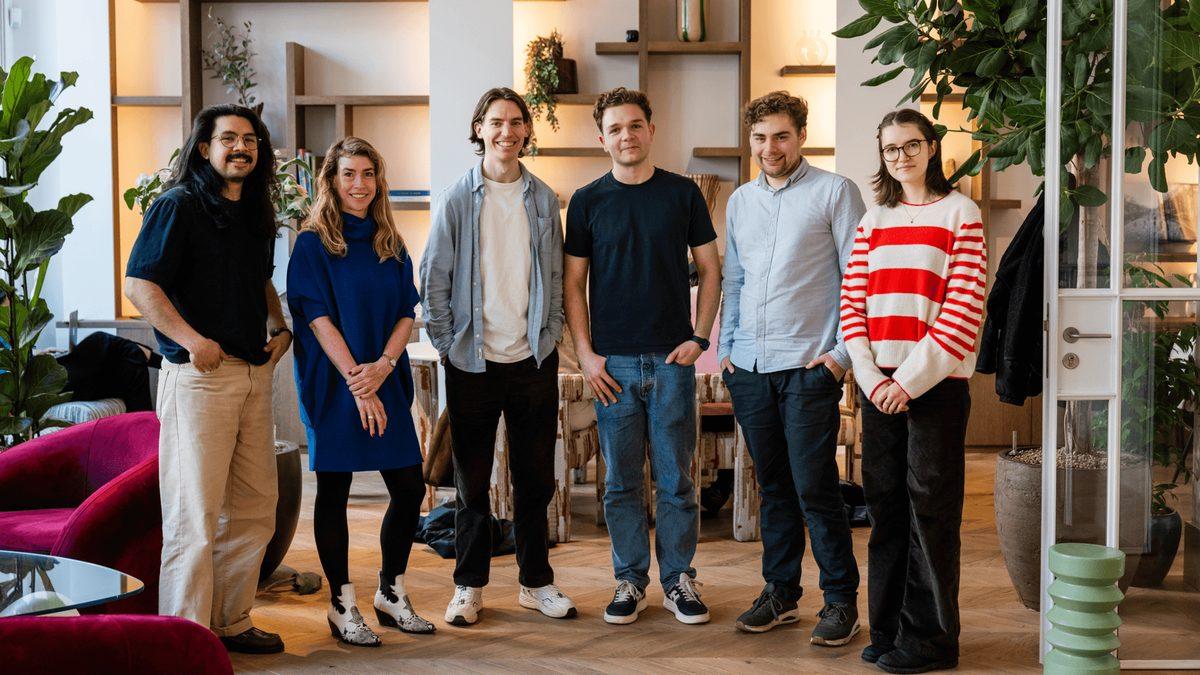
Climbing the steep stairs of an old canal house on the Keizersgracht in Amsterdam, all the way to the top floor, you find about ten people working under a wooden ceiling, with a big window looking out over the water. Reson8 is barely a year old, but its first speech recognition model went straight to the top of English benchmarks, beating giants with many times its money and people.ExplainerSpeech recognitionSoftware that turns spoken audio into written text, also called ASR (automatic speech recognition). Models are compared on word error rate (WER): the share of words they get wrong, so lower is better. Hugging Face's Open ASR Leaderboard runs many models on the same public test sets.SourceReson8's own benchmark, 8 April 2026: average word error rate over five English test sets from the Open ASR Leaderboard (AMI, Earnings22, Gigaspeech, SPGISpeech and Tedlium) for ten models. Resonant-1 scored 6.51%, ahead of a second Reson8 model (6.71%), Cohere Transcribe (6.78%), IBM, NVIDIA, ElevenLabs and Microsoft.Reson8 benchmarksreson8.dev (opens in a new tab)
Talking is the oldest way we pass on information, but computers taught us to type. Now they're learning to listen. We dictate messages, let meetings write themselves up and talk to AI assistants out loud, because speaking is about three times faster than typing on a phone, but also because what used to disappear the moment it was said, at the doctor's or on a customer call, can now be written down.SourceA 2016 Stanford study found speech input on a phone about three times faster than typing, with fewer errors, for both English and Mandarin.Stanford News, August 2016news.stanford.edu (opens in a new tab) Building the best version of that has become a race much like the one you know between ChatGPT, Claude and Gemini. OpenAI, NVIDIA and IBM all build speech models, and dictation apps like Wispr Flow are raising hundreds of millions.SourceWispr Flow has raised $361 million in total, including a $280 million Series B in August 2026 at a $2 billion valuation.Wikipediaen.wikipedia.org (opens in a new tab) Reson8 is one of the contenders.

Nobody at Reson8 brought up the leaderboard to us on their own, and there was nothing cutthroat about the atmosphere. Just a team working hard, well aware of how much is still ahead of them, and for now mostly happy with the office they've set up, down to the La Marzocco everyone is clearly proud of. Some would call that typically Dutch: do the work, and don't boast about it. It doesn't make them any less ambitious. We sat down with Raoul Ritter, co-founder and CEO, and Floris Bienfait, who had left Adyen a few months before our visit to join their founding go-to-market team.
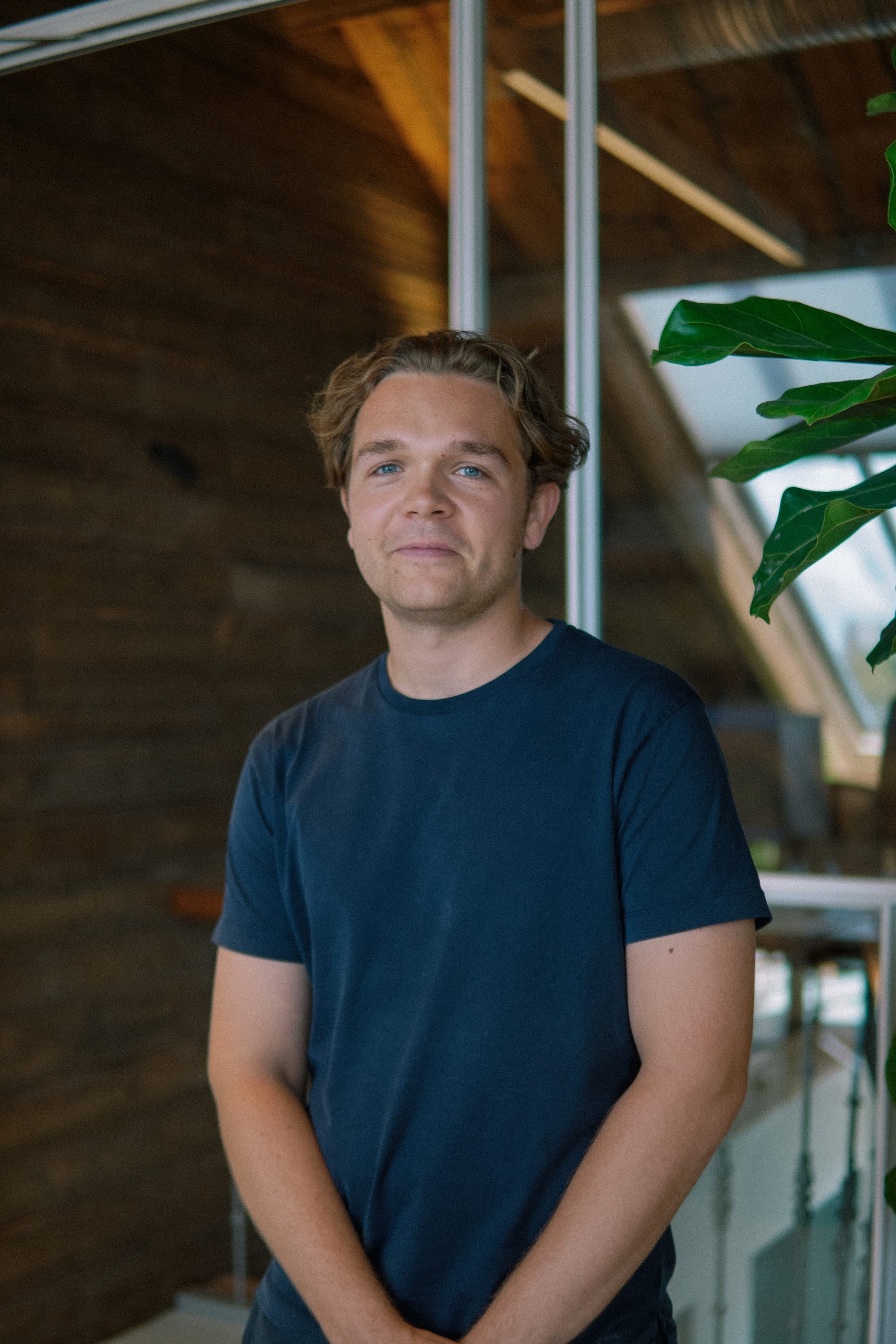
Raoul Ritter, co-founder and CEO.
Studied for a master's in Artificial Intelligence at the University of Amsterdam. Four years at Adyen, from operational support to software engineer, before starting Reson8 with co-founders Thomas Kluiters and Jarno Verhagen. Believes ambition should grow with a company: "as you build your company, you get to see that things are working and you become more ambitious instead of less ambitious."
Making Speech AI Work Beyond American English
The well-known speech models handle everyday language well, but the important words in a conversation are rarely everyday language. "It's medication names, or people's names, or street names, or dates of birth, or flight numbers," Raoul says. Most of us have asked a voice assistant to call someone and watched it dial the wrong person. Annoying, but harmless. The same slip in a doctor's notes is a different matter.
What's more, these models are built mostly in the US for American English, and they make noticeably more mistakes in other languages. Dutch, Polish and Swedish are spoken by millions, yet they're an afterthought. Why, Raoul asks, should a doctor working in Swedish get the medication names wrong while an American doctor gets them right?
Following along?
Subscribe to our newsletter for updates on us and our partners.
So Reson8 set out to build models for the long tail of languages, and launched with the major European ones, but also with Frisian, the regional language of the northern Dutch province of Friesland. It's a wink to home, and a proof point: no language is too small to get a model that works well. Make no mistake, this is a hard-core tech company. "We essentially try to build fundamental infrastructure," Raoul says. Reson8 builds an engine: speech models that other companies build their products on. Floris Bienfait, who takes that vision to customers together with founding account executive Eleonora Gatti, explains why the engine matters. "It's not as much about our technology giving people more accurate transcriptions," he says. "It's about giving doctors more time with their patients. It's about making sure that a lawyer is able to handle more cases, or that insurance agents can work through claims better, and get people the experience they deserve."
Top Tier in English, by Coincidence
Reson8 released its first model, Resonant-1, in April 2026. It's fast and accurate: transcribing an hour of audio takes about three seconds, and in French, Dutch, Spanish and Polish it beats Cohere and OpenAI's Whisper.SourcesMeasured on FLEURS, Google's public multilingual speech benchmark, as published by Reson8: average word error rate on French, Dutch, Spanish and Polish of 4.22% for Resonant-1, against 4.71% for Whisper v3 and 4.98% for Cohere Transcribe. Speed: Resonant-1 runs at a realtime factor of 1187, about three seconds per hour of audio. Reson8 benchmarks.FLEURShuggingface.co (opens in a new tab)Reson8 benchmarksreson8.dev (opens in a new tab) But what drew the attention in April was that it also cracked English. "We had a bit of a different philosophy in how we built and architected our models," Raoul says, "which resulted in really strong English performance as well."
A team of ~10 people and €5M, fifth on the Open ASR Leaderboard. Reson8 has the smallest team (~10 people) and the least money (€5M) of them. Among the top-ten organisations with both a known headcount and a funding figure of their own (Otter.ai, Modulate, ElevenLabs, AssemblyAI, Smallest.ai), the others have ~40 to ~400 people and $21M+ to $781M raised. Public companies, owned organisations and KIEFER (a group with no funding figure of its own) are not comparable and are left out. Chart of 14 organisations from the Open ASR Leaderboard, English short-form, version 17-10-2026, 56 ranked models: The top ten on the leaderboard, plus bigger names below. Each has its real rank, average WER, headcount and funding; a tilde marks an approximate figure. Logos run in rank order, left is better; each bubble is a headcount on a log scale, no cap. In rank order: Otter.ai, rank 1, 4.55% WER, ~300 people, ~$370M raised. Zoom, rank 2, 4.70% WER, 7,438 people, Public company. Microsoft, rank 3, 5.02% WER, ~223,000 people, Public company. Modulate, rank 4, 5.06% WER, ~40 people, $60M raised. Reson8, rank 5, 5.21% WER, ~10 people, €5M raised. KIEFER, rank 6, 5.23% WER, ~370 people, Private group. ElevenLabs, rank 7, 5.24% WER, ~400 people, $781M raised. AssemblyAI, rank 8, 5.39% WER, ~116 people, $115M raised. Alibaba, rank 9, 5.40% WER, ~132,000 people, Public company. Smallest.ai, rank 10, 5.71% WER, ~60 people, $21M+ raised. Cohere, rank 11, 5.77% WER, 800+ people, ~$1.5B raised. NVIDIA, rank 18, 5.94% WER, ~42,000 people, Public company. IBM, rank 19, 5.96% WER, ~264,300 people, Public company. OpenAI, rank 20, 5.96% WER, ~4,500 people, ~$120B+ raised.
Details and sources of this chart
A snapshot of the Hugging Face Open ASR Leaderboard (English), version of 17 Oct 2026, 56 ranked models. Each organisation is shown by its best-ranked model; WER is the board's average over its default test sets. Headcount and funding are as last disclosed; public companies and groups show their whole company's headcount.
Logos are trademarks of their owners, shown to identify the organisation.
| Rank | Model | WER | Headcount | Funding |
|---|---|---|---|---|
| 1 | OtterAI/speech-v3.1 | 4.55% | linkedin.com | techcrunch.com |
| 2 | zoom/scribe_v2_pro | 4.70% | sec.gov | |
| 3 | microsoft/azure-speech-07-2026 | 5.02% | sec.gov | |
| 4 | modulate/multilingual | 5.06% | techcrunch.com | modulate.ai |
| 5 | reson8/resonant-1 | 5.21% | reson8.dev | tech.eu |
| 6 | sophea/asr-k1 (preview) | 5.23% | builtindublin.ie | sophea.ai |
| 7 | elevenlabs/scribe_v2 | 5.24% | sifted.eu | elevenlabs.io |
| 8 | assemblyai/universal-3-5-pro | 5.39% | linkedin.com | assemblyai.com |
| 9 | Qwen/Qwen3-ASR-1.7B-hf | 5.40% | sec.gov | |
| 10 | smallestai/pulse | 5.71% | customerthink.com | customerthink.com |
| 11 | CohereLabs/cohere-transcribe-03-2026 | 5.77% | betakit.com | betakit.com |
| 18 | nvidia/canary-qwen-2.5b | 5.94% | sec.gov | |
| 19 | ibm-granite/granite-speech-4.1-2b | 5.96% | sec.gov | |
| 20 | openai/gpt-transcribe | 5.96% | fortune.com | siliconangle.com |
Reson8 builds and runs its models on its own GPUs, rather than renting them in the cloud, as most AI startups do.ExplainerGPUs and owning your computeGPUs are chips originally made for graphics that now do the heavy lifting in training and running AI models. Most companies rent them by the hour from a cloud provider. Owning them means buying the hardware, placing it in a data centre and maintaining it yourself. If any European AI company could lean on the sovereignty story, it's this one, but Reson8 would rather win on the product. "I don't really love the sovereignty angle," Raoul says. "We want customers to pick us because we have the best model, not just because we're European." For the team, owning the hardware gives .
Floris knew Raoul from Adyen, and followed Reson8's launch on LinkedIn. "I knew immediately, this is something that I really want to join." The conversations with the team sealed it. "The people first and foremost," he says, when we ask what impressed him. "They had very clear views on how they see the industry developing, to the extent that it gave me a certain sense of trust." The technology did the rest: a model built from scratch in Europe, not wrapped around an American one.

Floris Bienfait, go-to-market lead.
Studied international business administration and business information management at Rotterdam School of Management. Nearly six years at Adyen, from sales development to senior strategic growth manager, after internships at Nestlé, BCG and Heineken. Joined Reson8 for the chance to "build the playbooks instead of having other people build them for you."
Trading an Established Playbook for a Blank Canvas
Floris didn't start in the startup world. Studying in Rotterdam, where the big companies dominated campus and "startups just weren't really that well known," he interned at Nestlé, BCG and Heineken, deliberately trying a different environment each time. In 2020 he joined Adyen and, after nearly six years in a demanding environment, had worked his way into what he tells us was a comfortable position.
"From a network perspective, from an international exposure perspective, everything was great," Floris says. He learned fast there, thrown into the deep end with experts around him. And that is exactly what makes it hard to leave: bigger corporations tend to offer a clear next step, and then another, and the further along you get, the more it feels like there is to lose. What made him reconsider his next step was the question he was asking himself. "What are the next things that I want to learn in my career? How much autonomy do I want? Do I want to have more ownership than I currently have?"
So he reached out. Reson8 had an open role, though at this stage "roles are very fluid, of course," and Floris didn't know exactly what Raoul was looking for. "But I knew that a coffee wouldn't hurt, and that reaching out can't hurt either." It led him to go-to-market, a role that sits between Reson8's engineers and its customers.ExplainerGo-to-market (GTM)everything it takes to get a product in front of customers and turn that into revenue, from sales and marketing to partnerships and pricing. At an early-stage startup it is usually one or two people doing all of it. "We have extremely talented engineering people who are building out incredible voice AI products," he says. "What we need to do is make sure that gets put in front of the right customers, and that they start using it." At a company of ten, that means he does sales, marketing and events, basically anything that serves that goal. At the start, that was a blank canvas, and what drew him was the chance to build it from scratch. "Reson8 gives me the opportunity to build the commercial side of the business, to build the playbooks, instead of having other people build them for you and then executing on them."
Selling without a brand is harder than it sounds. Nobody knows the name yet, so every conversation starts from zero. "But it also means it's extremely rewarding when you do see it working," Floris says. "Every single deal that we do at this stage, I can point to the conversations that we had in order to get there."
Ambitious, Eager to Learn, and Ready for a New Problem Every Day
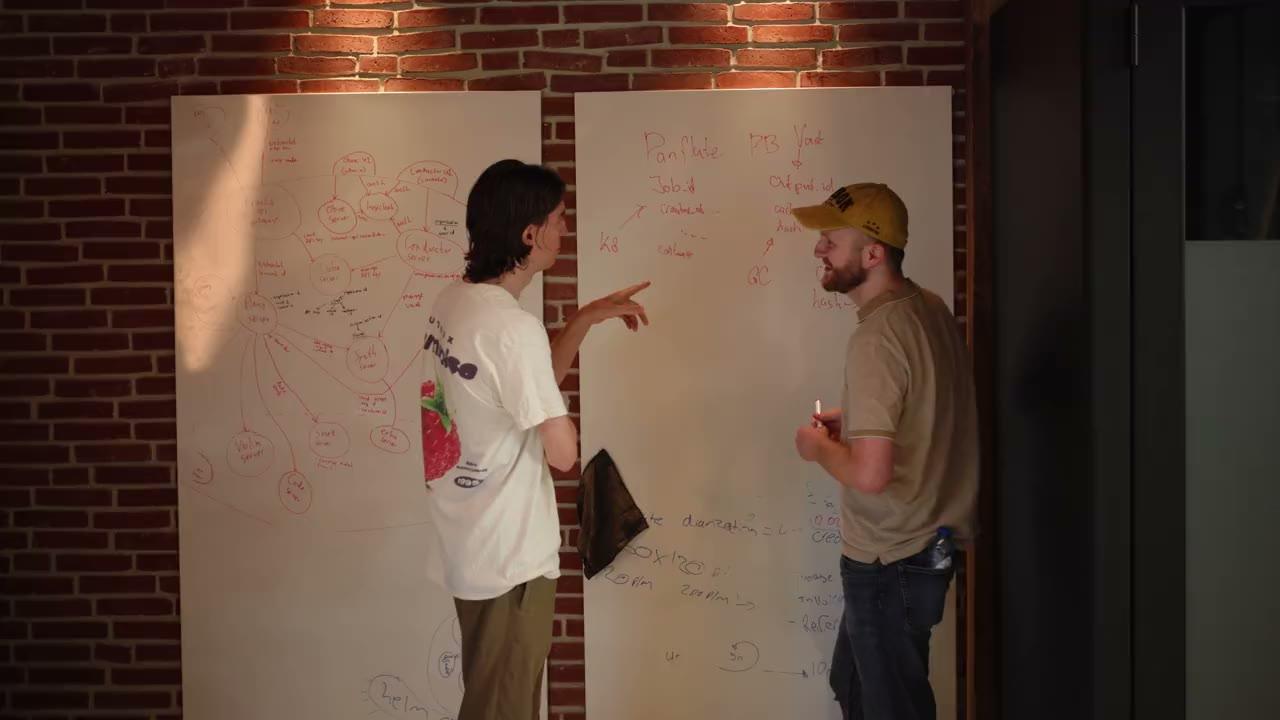
Reson8 is early. The company is about a year old, raised its pre-seed in March, and released its first models in April.ExplainerPre-seedUsually a startup's first institutional funding round, raised before there is meaningful revenue. Reson8 raised €5 million in March 2026, led by Balderton Capital with NP-Hard Ventures. Going from zero is inherently chaotic and brings new challenges every day. Raoul has a way of thinking about those challenges. "There are seven raging fires in the room, and the only goal is: what is the most raging of these seven fires? That's the one you fix that day," Raoul told us. It can be anything. "A GPU node acting up, a customer edge case we haven't seen before, pricing, documentation." The day we visited, it was pricing: a few engineers, the people who build the models, deep in a discussion about what customers should pay.
"Seven raging fires" sounds like a recipe for stress. Raoul sees it differently. "The task over time is also not to be intimidated by the raging fires," he says. "The first time something breaks, it sucks. It's painful and it's frustrating. But you learn over time that part of doing work is that things break. As long as you learn from your mistakes and you get a better product out of it, it's totally worth all the mistakes you make."
Working on these fires is a talent-dense team with experience at larger companies. Its engineers come from Rippling, Booking, Adyen and high-frequency trading, and two of the founders, Thomas Kluiters and Jarno Verhagen, had already built Juvoly into a medical scribe used by a large share of Dutch GPs before Tandem Health acquired it. "We know how to scale," Raoul says. He told us that for many teams, scaling is an afterthought, and that is exactly why the experience of his co-founders is so valuable.
Reson8 is hiring engineers and researchers.
See open rolesWhat Floris likes most is the speed at which the team works. In a previous job, he says, getting something onto a roadmap could take months. At Reson8, a customer recently flagged something in one of the models' output. "I sent it over to our engineers, and a few hours later it was fixed and it was live." That only works because there's no distance. Floris sits next to the engineers, people he says he rarely got to work this closely with before. "Usually there would be a very clear division in who is where, even physically. Now it's everything under one roof." Customers notice too. "They're impressed by the fact that we're able to fix it or make updates so quickly."
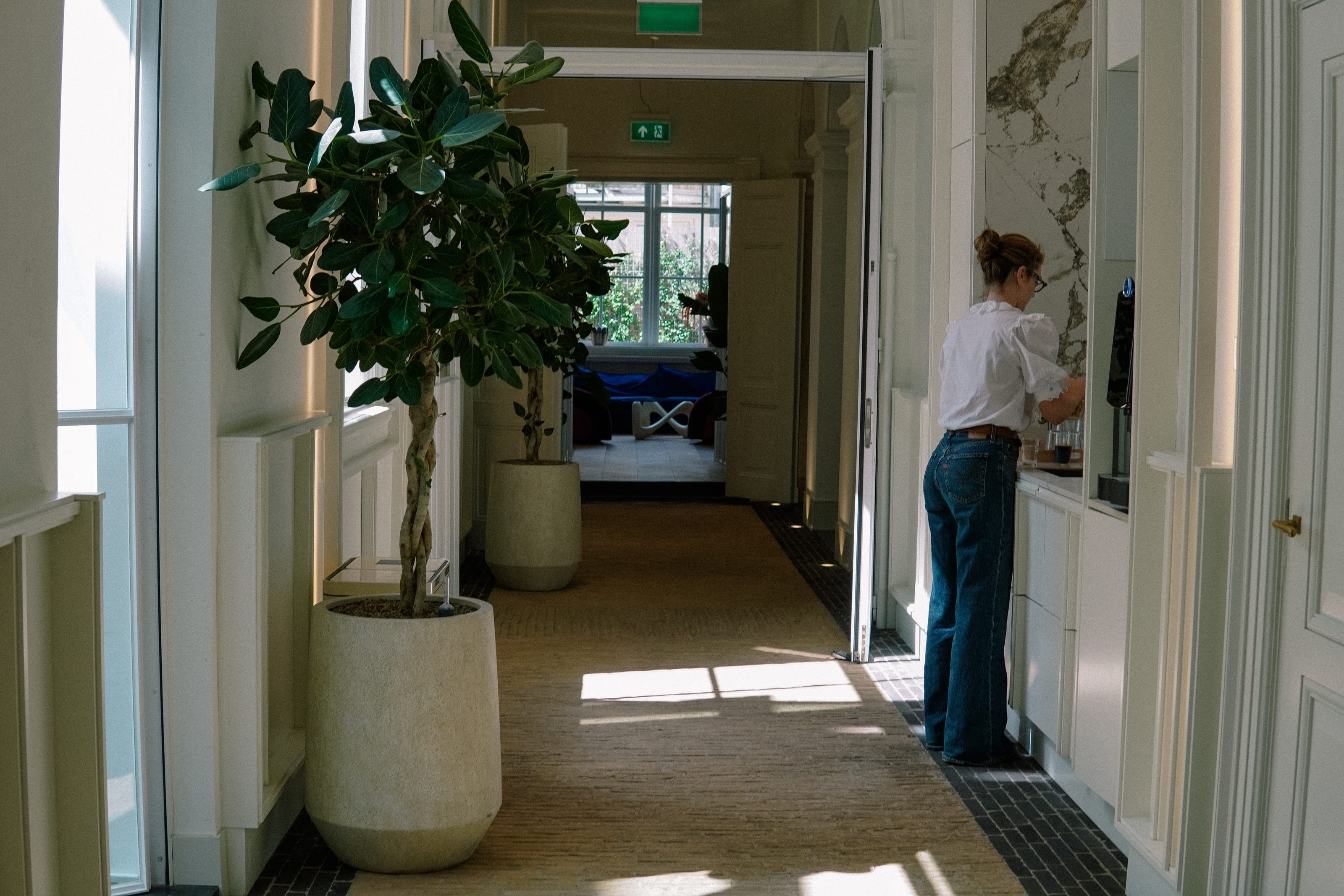
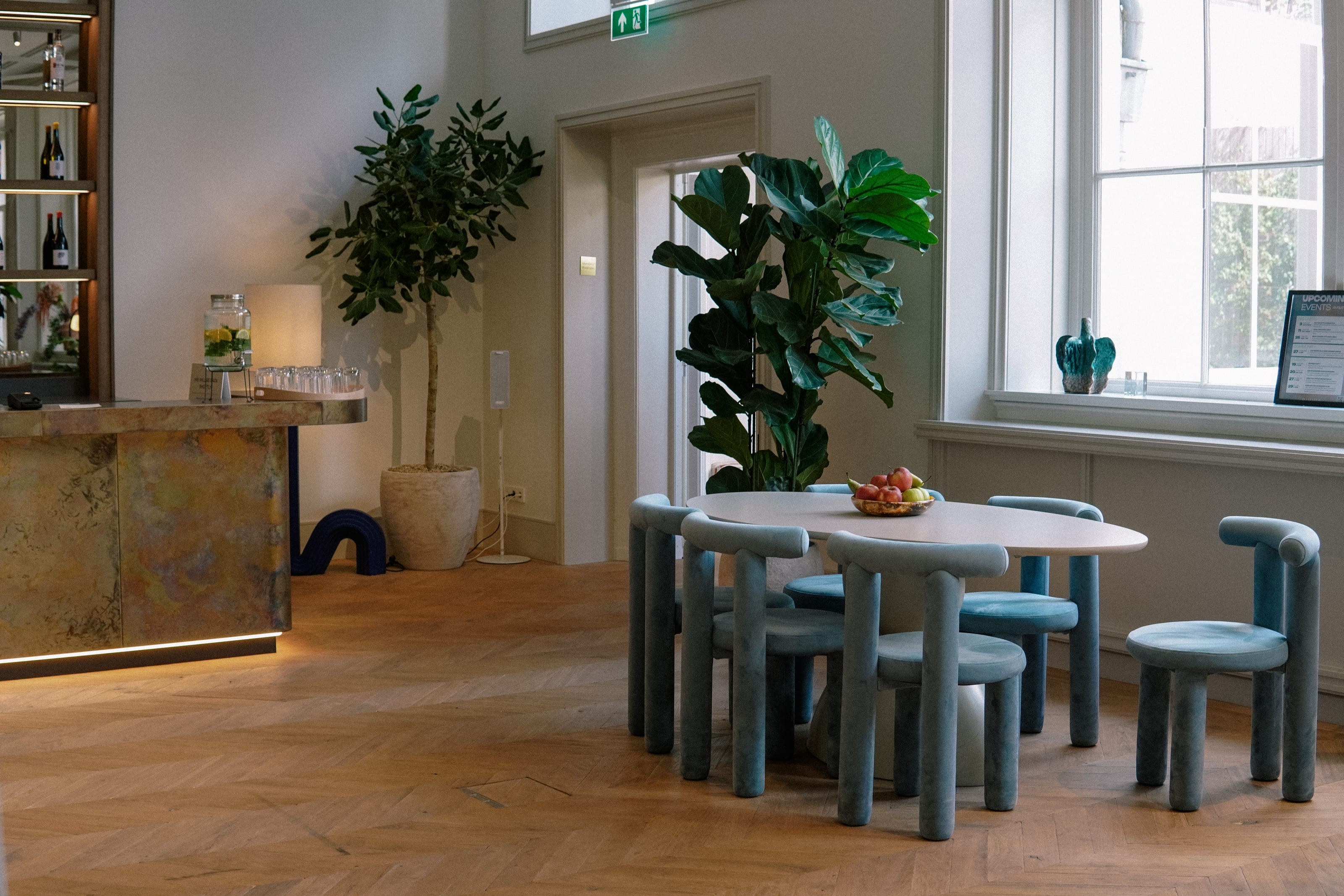
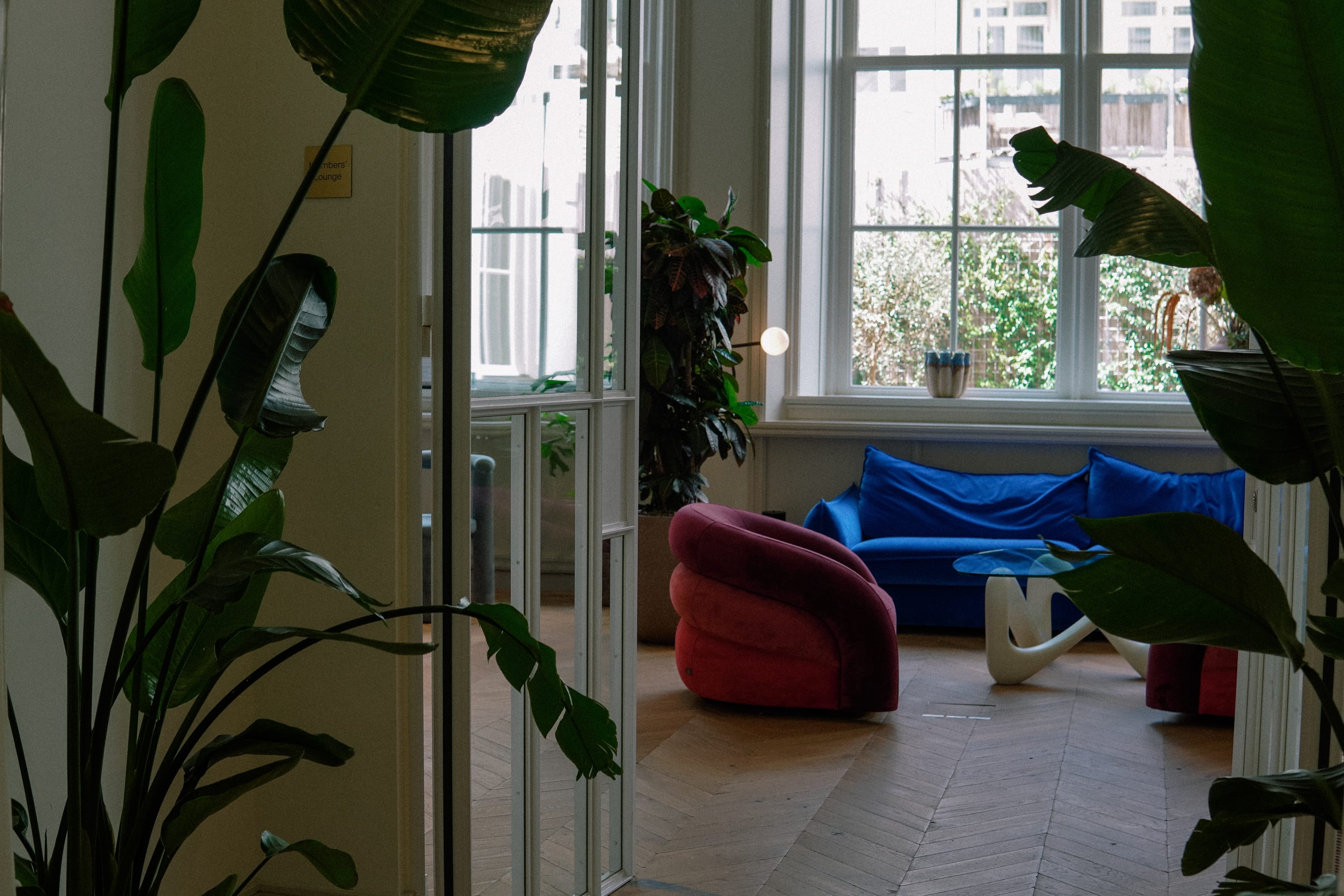
That mix of ownership and wanting to learn is what Raoul looks for in a hire. He wants engineers who are "super ambitious and already know a fair bit, but are also eager to explore and learn more." On both the technical and business sides, he looks for "a very high slope": people who still learn fast and want to work on hard challenges with fun people. He also wants to keep the team small. "You have talent mass and talent density. For us it's more about getting a very good talent density than mass." Grow too fast, he says, and you lose the culture and the values that matter most. "You want to scale mindfully."
Start With What You Want to Learn
Floris has worked at a large corporation, a scale-up and a startup. His advice to someone choosing between them starts with a question. "Really reflect on what it is that you're trying to learn." Some people thrive with training, experts and a support system around them. Others are "very comfortable with dealing with ambiguity, not needing someone to tell you what the next thing is that you need to do, but being proactive enough to actually go out and do it." That's more about personality than anything else, he says. "There's no wrong path to take in these kinds of situations. And one can always lead to the other."
His second piece of advice is about timing. "When you're early in your career and you have a couple of years of experience under your belt, or none at all, you don't have the level of responsibility in your personal life that you're going to have later. If there's any time to dive into the deep end and take that kind of risk, being early in your career is definitely the time to do it." And if you believe in an industry, don't wait. "AI, and voice AI specifically, is a perfect example of that. It's better not to sit around and wait for it to pass by, but to make sure that you dive in."
Made it this far?
Subscribe to our newsletter for updates on us and our partners.
The AI space is crowded, no doubt. With billions flowing to a handful of companies, it's hard to believe there's still room to build something better. Reson8 shows there is. A team of about ten, pragmatic and heads down, took on a problem bigger players were already busy with, and is already competing at the very top. Since our visit, we transcribe all our own interviews with Reson8, and it feels good to know who built it. If anything, let Reson8 be the proof that you can still make a difference, even in races that look decided.
Last updated 21 October 2026.